
A harbor-ops app pages AppDynamics metric snapshots using offset += 1 after each 50-item page instead of advancing by the page size the API contract uses. What is the likely construction result?
Select an answer to reveal the explanation.
Short Explanation
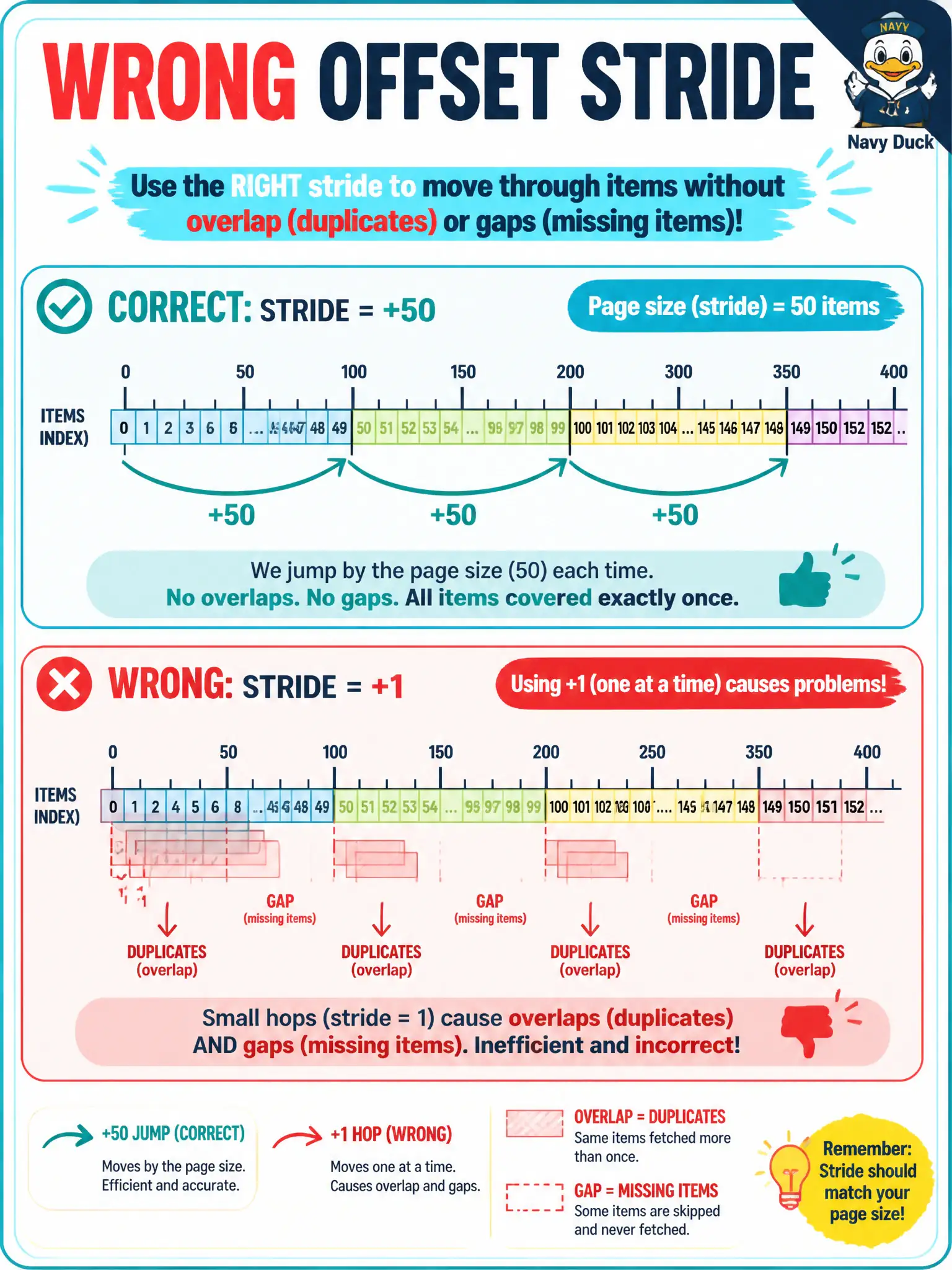
Imagine stepping a measuring tape by one inch when each photo covers fifty inches—you either re-shoot the same stretch or skip a stretch. Wrong stride skips or overlaps. Step by the contract the API actually uses.
Full Explanation
AppDynamics offset paging for harbor-ops metric snapshots expects the consumer’s stride to match the documented contract—typically advance by the page size or by the length the API defines, not by a literal +1 after a fifty-item window. Using offset += 1 after each full page either re-reads nearly the same slice or drifts relative to item boundaries, so snapshots show gaps, overlaps, or both across the night’s metric export.
Servers do not silently convert a wrong offset stride into cursor paging; the client remains responsible for the contract. A bad stride also does not force a total-count field to appear on later responses. HTTP 200 pages do not upgrade into WebSocket metric streams because of arithmetic mistakes—the transport stays REST while the windows are wrong. Align client constants with the AppDynamics paging documentation for that metric resource, including whether limit is honored as requested or capped server-side. Harbor-ops exports should unit-test stride math with fixture pages before promoting the collector.
Exam caveat: know whether the API’s offset is item-based and what increment it documents; never assume +1 means “next page” when each page already returned dozens of items. Operational check: after two pages, assert the second request’s offset equals the first offset plus the agreed page size or returned length, and check snapshot ids for neither duplicates nor missing members in sequence.