
A city utilities dashboard pages Meraki device inventory for every district pump house. The API returns items and a next link but never a grand total. The developer’s loop waits until a count field appears before fetching more pages. What should the consumer do instead?
Select an answer to reveal the explanation.
Short Explanation
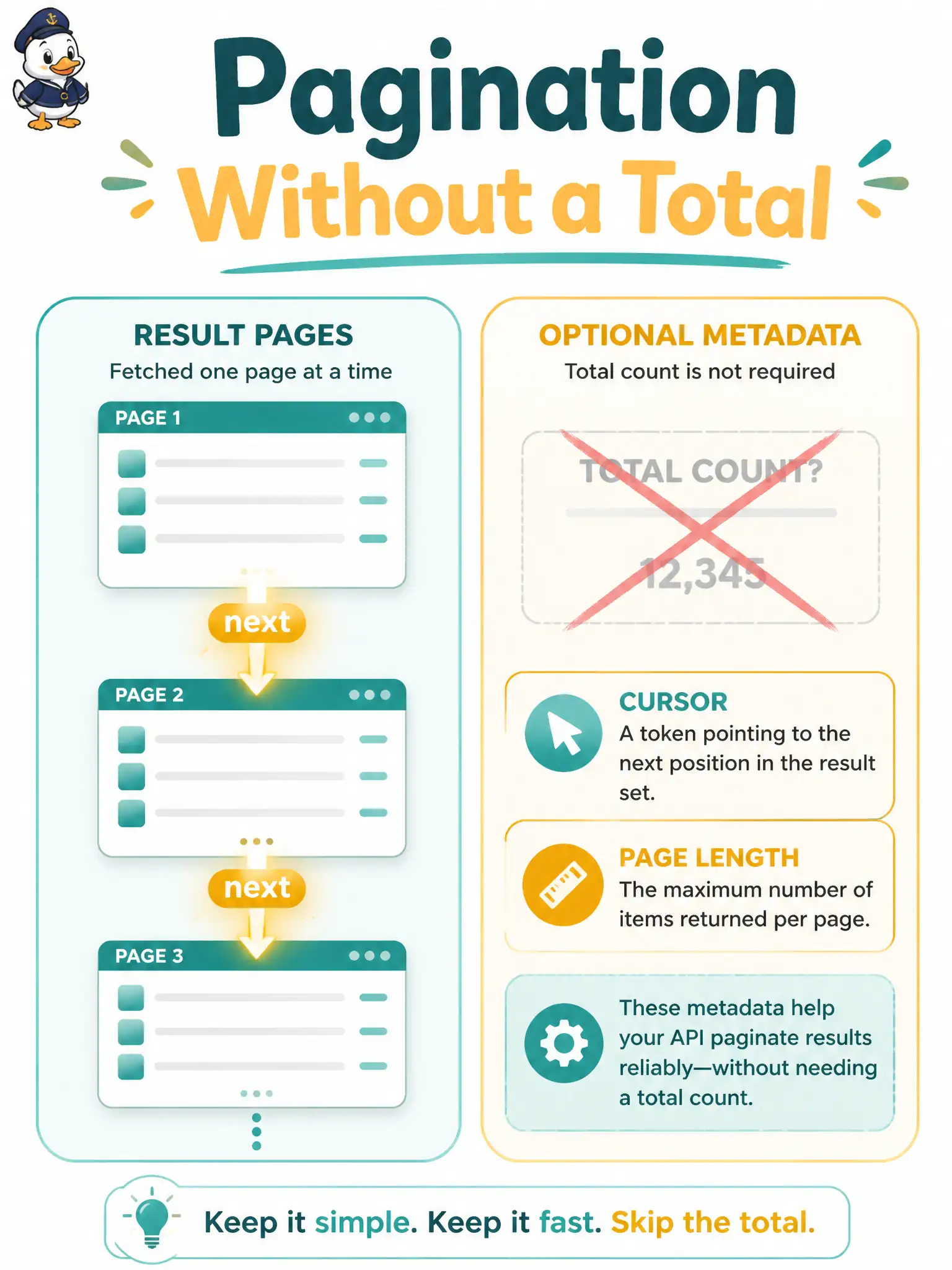
Think of a museum tour that hands you the next gallery card instead of a total room count. You keep walking while next exists. A missing grand total is optional metadata, not a reason to freeze the loop.
Full Explanation
Meraki paging for district pump-house inventory commonly returns a page of items plus a next (or cursor) signal without publishing a grand total. Construction that waits for a count field never advances: the consumer must follow next—or advance by cursor/returned page length—until the API stops handing another window. Total is optional metadata for progress bars, not a loop precondition for the civic inventory job.
Treating a missing count as a hard failure aborts a healthy 200 walk and invents a required field the platform did not send. Issuing one oversized GET with an extreme limit tries to dodge paging instead of constructing against the documented window contract and invites truncation or rate pressure. Switching to SQL COUNT(*) against Meraki’s database is not an API consumer technique at all—you have no such database access, and DEVCOR expects REST pagination, not back-door queries.
Exam caveat: absence of total does not mean the collection is empty or the job failed; it means terminate on next exhaustion (or short/empty page per that API’s contract), not on a count field. Operational check: log each page’s item length and whether next is present, assert the loop exits when next disappears, and confirm the aggregated pump-house list grows across pages even though no total was ever returned.