
A developer proposes skipping the OAuth token request because a fresh cached Cisco device list is still within max-age. Which statement is correct?
Select an answer to reveal the explanation.
Short Explanation
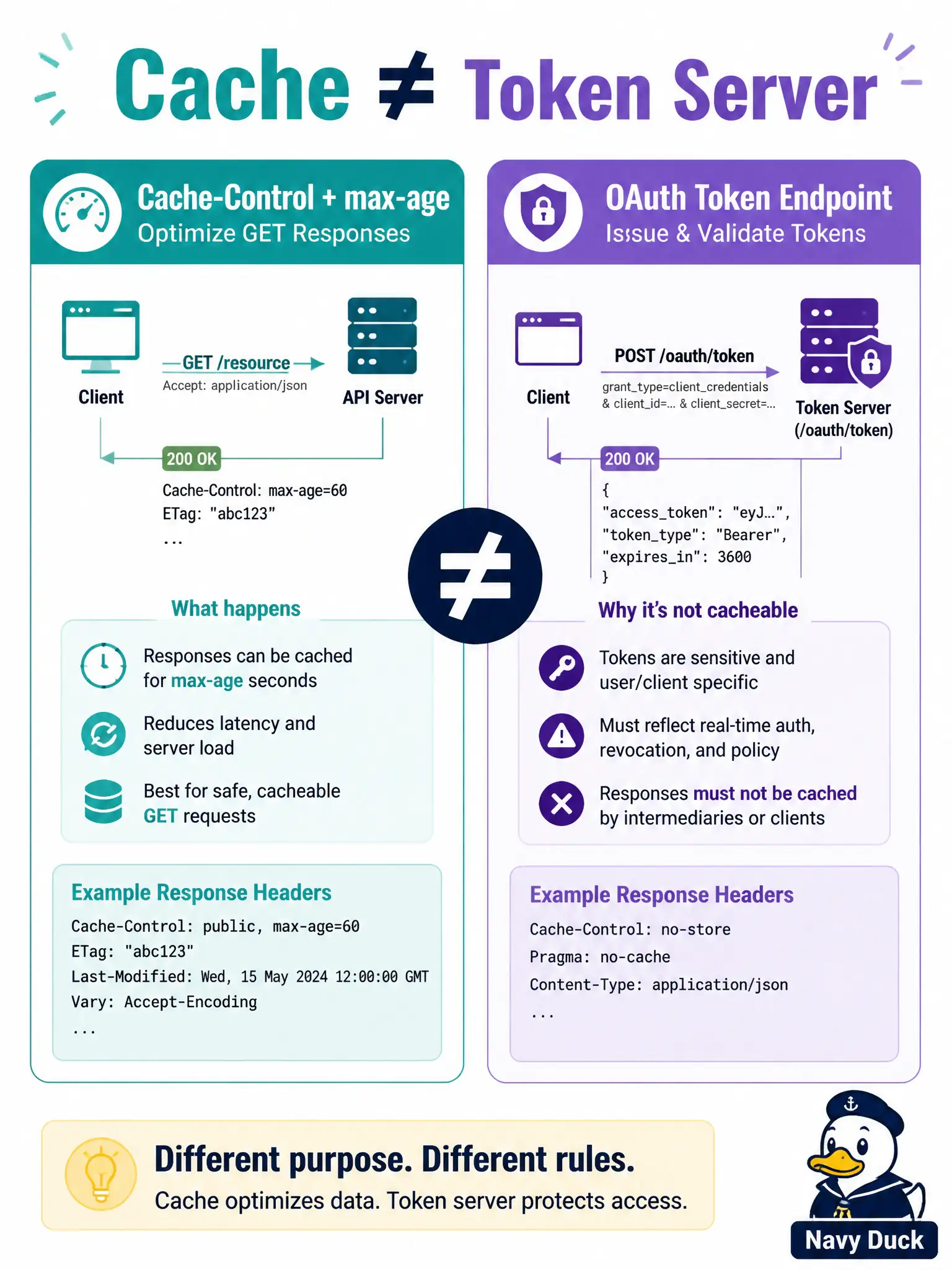
A leftover cafeteria tray in the fridge is not a new meal ticket. Reusing a fresh GET saves origin load; it does not mint tokens or skip the grant. Caching and authorization stay separate jobs.
Full Explanation
HTTP cache directives optimize reuse of successful GET representations; they do not mint OAuth grants. When a developer proposes skipping the OAuth token request because a fresh cached Cisco device list is still within max-age, that proposal is wrong: cache controls do not issue tokens or replace the authorization grant hop. The municipal client must still obtain (or refresh) an access token from the authorization server before calling protected Cisco APIs when the grant is missing or expired—even if some prior GET body remains fresh in cache.
Claiming a fresh cache entry is a valid substitute for obtaining an access token fails by conflating representation freshness with authentication. Asserting load-balancer health checks can mint Bearer tokens when Cache-Control is present invents a non-existent auth mechanism. Believing max-age automatically refreshes OAuth grants without contacting the token endpoint fails OAuth semantics entirely.
Exam caveat: a cached GET may be reusable for display while a separate token is still required for the next privileged call; conversely, having a valid token does not bypass no-store/private rules. Keep token storage out of shared HTTP caches.
Operational check: expire the access token while a device-list cache entry is still fresh, and confirm the client hits the token endpoint before any new protected Cisco request rather than “authorizing” via max-age alone.