
A library-network tool updates fifty Meraki device names in one batch; one identifier returns an unrecoverable 4xx name conflict. What is the correct control flow?
Select an answer to reveal the explanation.
Short Explanation
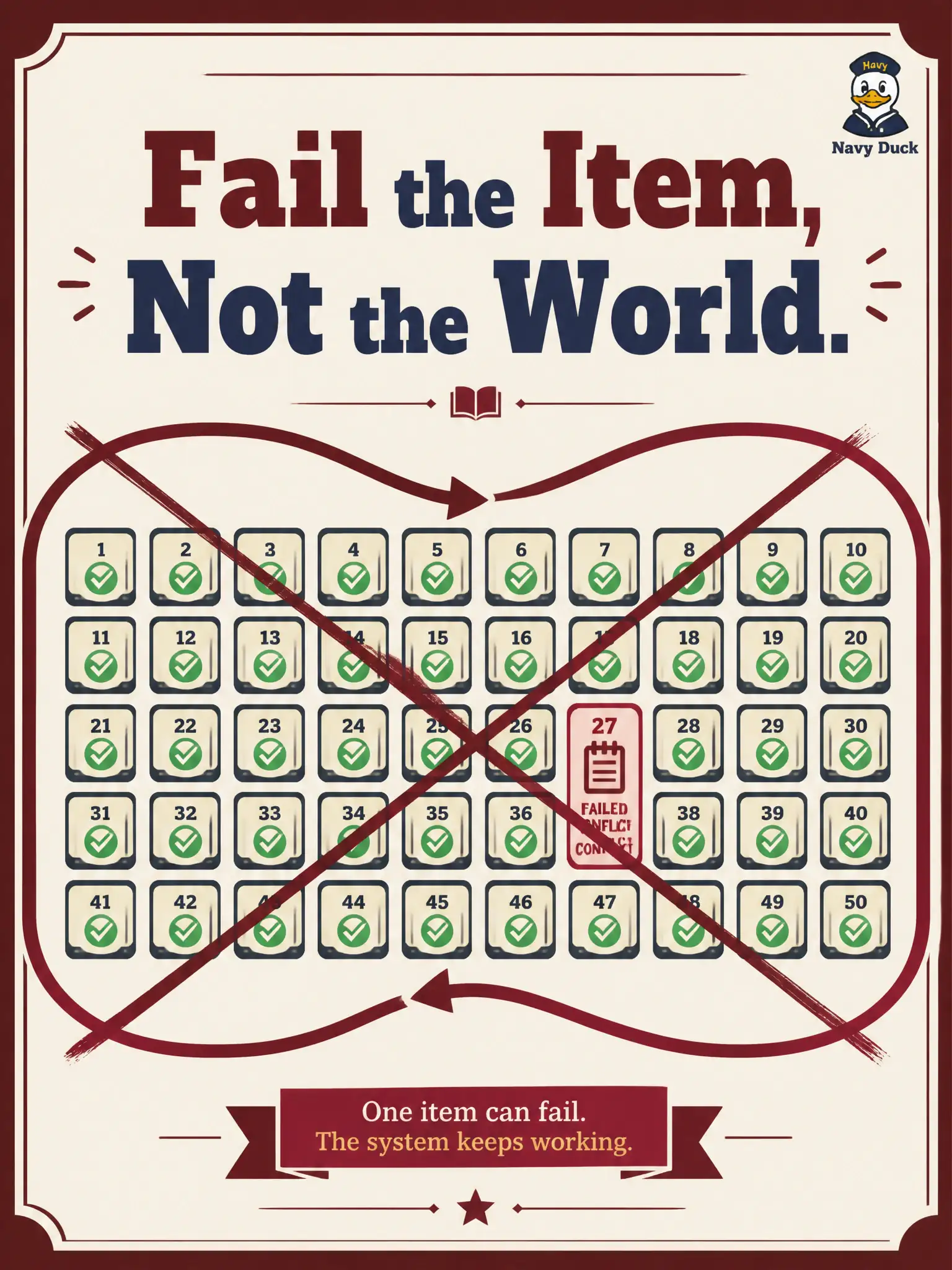
One spoiled apple in a crate does not mean you throw the whole harvest back on the truck forever. Isolate the conflicting identifier, record the failure, and do not retry the entire batch without bound.
Full Explanation
In a multi-item update, an unrecoverable 4xx should isolate that identifier. When the library-network tool updates fifty Meraki device names and one returns a name conflict, the correct control flow is to fail and record that one identifier while continuing or completing the rest of the batch—without unbounded whole-job retry. Municipal ops need a precise failure list so staff can rename or skip the conflicting device while the other forty-nine updates remain useful.
Replaying the entire fifty-item job forever until every sibling eventually succeeds fails because the conflicting name will keep returning 4xx; whole-batch replay wastes Meraki API budget and may re-apply already successful renames. Aborting the process with no record of which item failed fails operationally: operators cannot guess which of fifty IDs collided. Converting every remaining update to fire-and-forget calls that ignore further error statuses fails by hiding additional conflicts and producing silent drift between the tool’s report and Meraki inventory.
Exam caveat: partial-success batch semantics vary by API (all-or-nothing vs per-item results)—when the platform returns per-item errors, isolate failures; when it rolls back the whole batch, still record which identifier triggered the unrecoverable cause. Do not treat one 409 as a signal to 503-backoff the fleet.
Operational check: after a staged conflict injection, confirm the tool’s summary lists the failing device ID and status, shows success counts for the rest, and does not schedule an infinite full-batch redo.