
A water-utility script sends PATCH to a Cisco platform endpoint and receives HTTP 405 Method Not Allowed. What should the consumer do next?
Select an answer to reveal the explanation.
Short Explanation
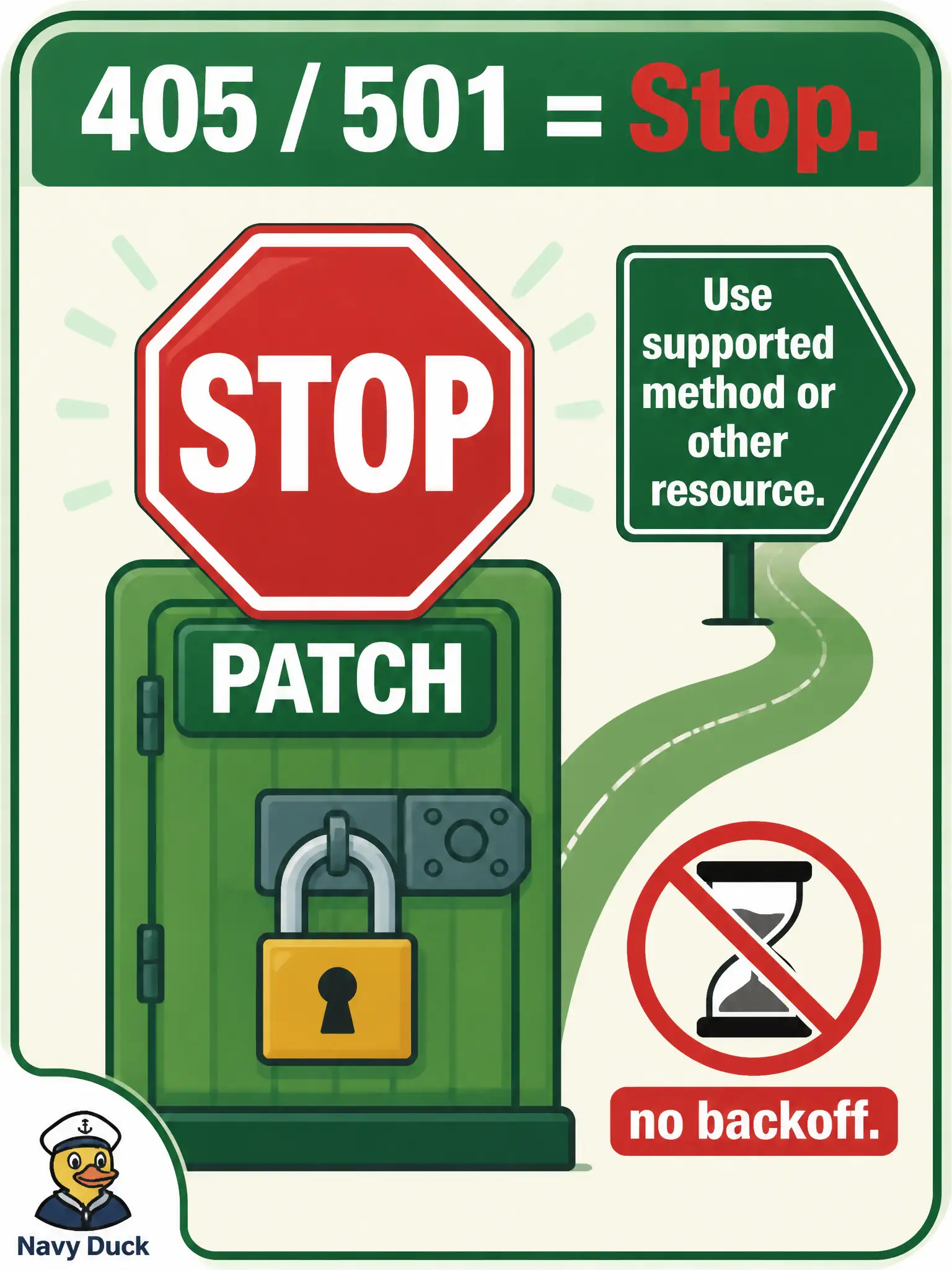
Asking a library to microwave a book will not work no matter how patiently you wait. A 405 (or 501) means that verb or feature is not supported, so change the method or resource—do not backoff forever.
Full Explanation
HTTP 405 Method Not Allowed (and similarly 501 Not Implemented) means the target Cisco platform endpoint will not accept that verb or operation as requested. For the water-utility script, a PATCH that returns 405 will not become valid after waiting: the resource’s allowed methods are a contract property, not a load condition. The consumer must stop and switch to a supported HTTP method—or to a different resource that implements the needed mutation—after consulting Allow headers, API docs, or discovery metadata.
Starting exponential backoff because an unsupported method might appear after a short wait fails by concept: backoff addresses temporary capacity or dependency issues (503/429 patterns), not verb support. Converting the call to a blind GET retry loop until PATCH is accepted fails because GET cannot substitute for a partial update and will never “unlock” PATCH. Raising the client timeout so the same PATCH can complete before the server rejects it fails because 405 is a completed application response, not a slow-success race; a longer timeout only delays the same rejection.
Exam caveat: some gateways return 405 for disabled write methods on read-only roles—fixing RBAC or using an alternate write API is still “change method/resource,” not retry. Do not treat 405 like 409; conflict handlers assume the method is allowed but state conflicts.
Operational check: capture the Allow header (if present) and OpenAPI operation list in the utility’s error report, confirm the next attempt uses a documented verb or endpoint, and ensure no backoff timer is armed solely because of 405.