
A city Webex ChatOps integration receives remaining-call and reset-time metadata from the API before it has earned a 429. What should a robust consumer do with that signal?
Select an answer to reveal the explanation.
Short Explanation
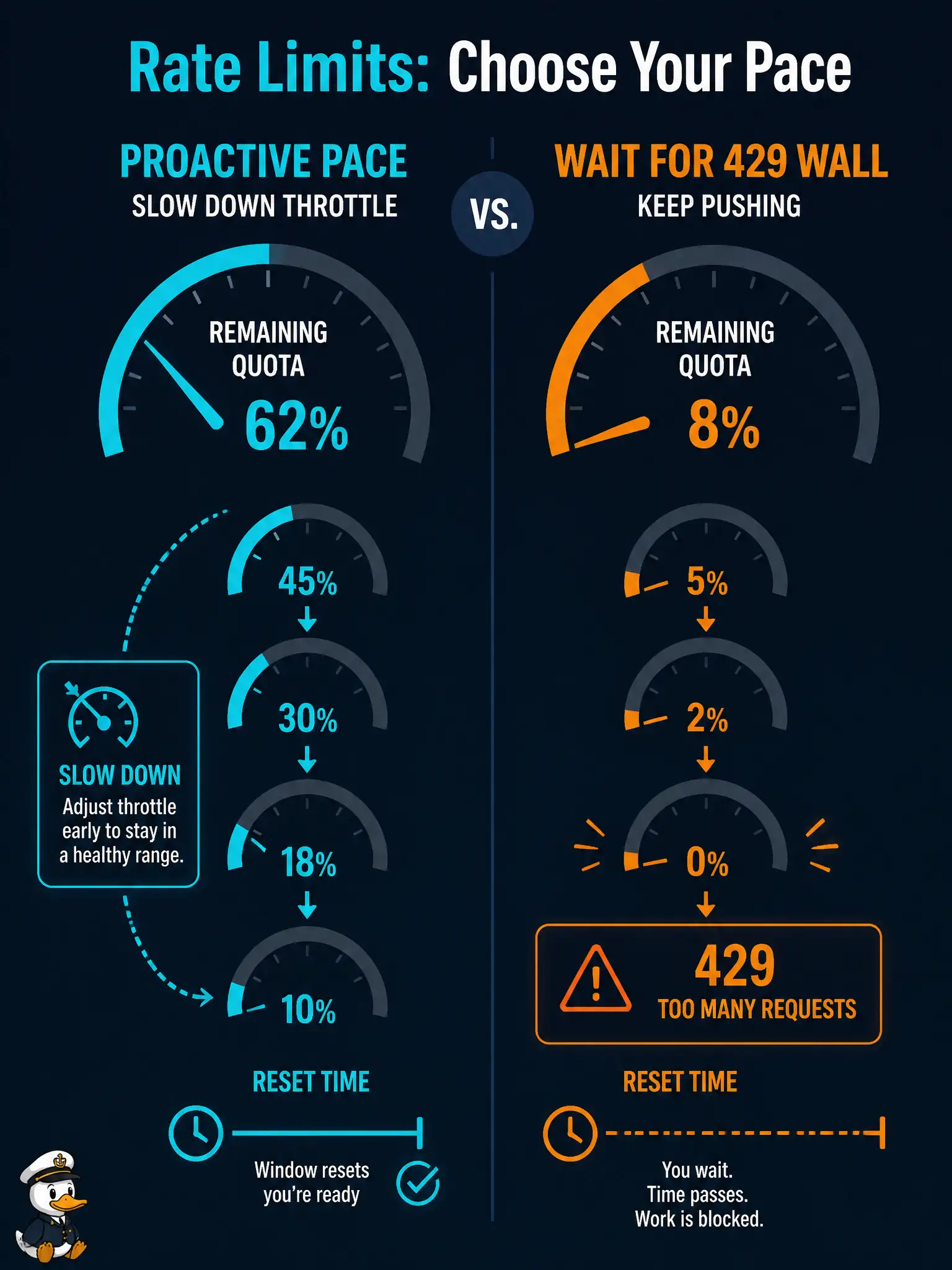
Seeing 'few tickets left' before the gate slams shut lets you slow the line early. Pacing from remaining/reset metadata is stronger than waiting for the hard 429.
Full Explanation
Remaining-call and reset-time metadata from the Webex API is a proactive quota signal. A robust ChatOps consumer slows or paces outbound calls using those hints before earning a hard 429—preserving headroom for other municipal jobs and avoiding abrupt lockouts. Quota headers are part of polite client design, not optional decoration.
Ignoring quota metadata until a hard 429, then panic-retrying, wastes the early warning and often worsens throttling. Deleting the integration because remaining quota exists misreads “capacity left” as unauthorized. Treating remaining-quota fields as valid only when named a Meraki-specific header invents a naming monopoly; Webex (and others) may use their own header or body fields—consume what the API documents.
Exam caveat: pacing from hints should still combine with Retry-After handling if a 429 arrives; hints reduce likelihood but do not eliminate bursts from parallel workers. Operational check: log remaining and reset values from Webex responses, enforce a client-side rate aligned to reset-time, and verify call volume drops before hitting 429 in a load test. When remaining calls approach zero, queue or delay non-critical ChatOps notifications first while preserving budget for high-priority municipal alerts. Reset-time tells you when the window refills—schedule the next paced burst after that instant rather than guessing.