
Two defects hit the parks-department automation packages. Package A fails on a clean runner because a required library was never listed. Package B lists two libraries that cannot be installed together. How should those packaging defects be classified?
Select an answer to reveal the explanation.
Short Explanation
Forgetting to list an ingredient and listing two ingredients that cannot share a bowl are different kitchen mistakes. One is undeclared; the other is an incompatibility—both live at the package level.
Full Explanation
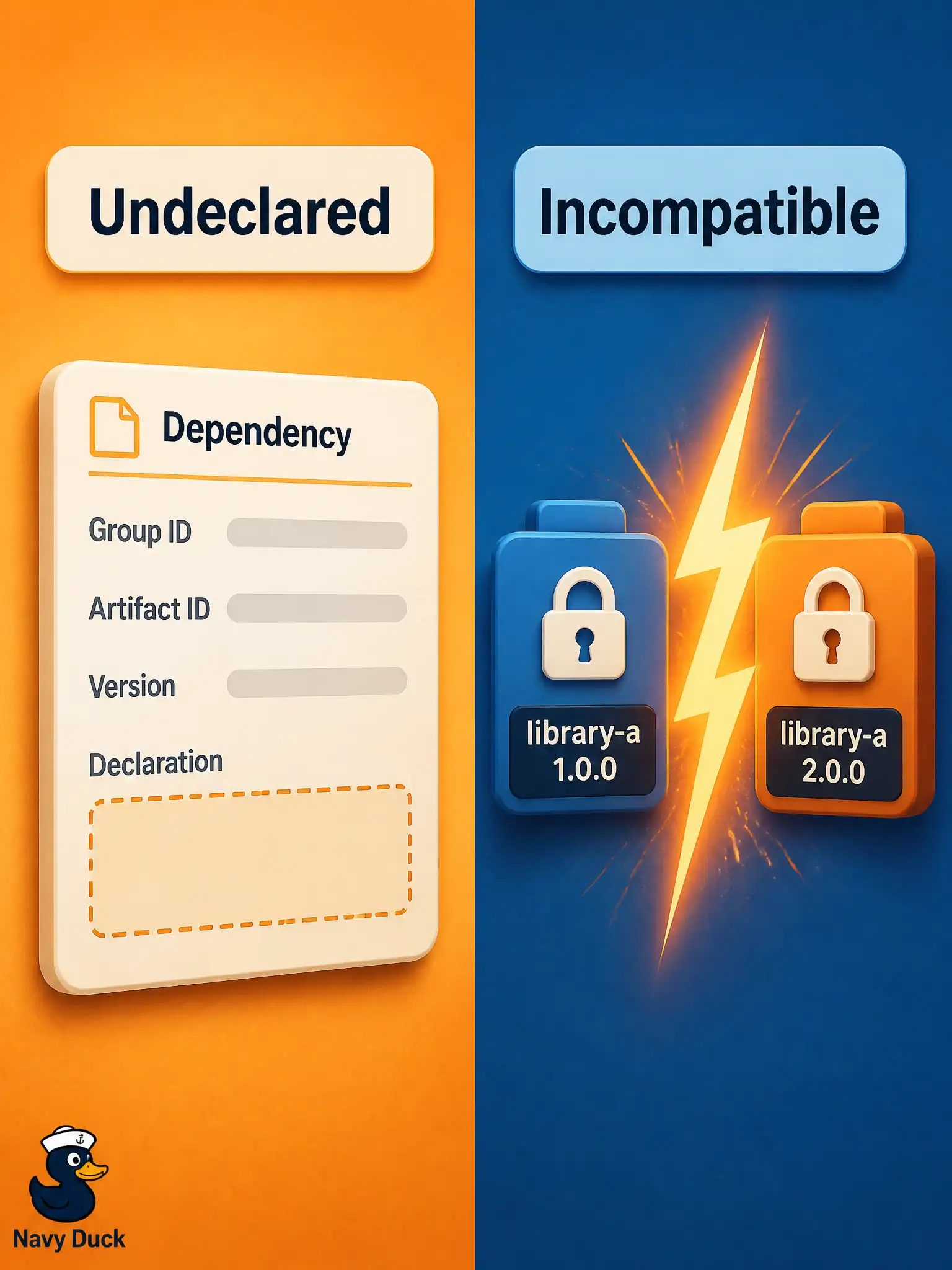
Packaging defects classify by how the dependency graph fails. Package A fails on a clean runner because a required library was never listed: that is an undeclared dependency—the code imports something the package metadata does not claim, so isolated installs break. Package B lists two libraries that cannot be installed together: that is an incompatible dependency conflict—the declared set has no satisfiable joint resolution. Both are release-packaging problems, not unrelated infrastructure noise.
Calling both CI pipeline forensics issues unrelated to packaging misses that clean-runner failure and unsatisfiable installs are classic package-metadata defects. Framing A as a Dockerfile layer cache issue and B as Kubernetes affinity misconfiguration relocates the failure to container cache and scheduler placement, which do not explain a missing declared library or mutually exclusive package constraints. Calling A an OpenAPI schema error and B an OAuth2 grant misconfiguration confuses API contract and auth design with install-time dependency declaration.
Exam caveat: an undeclared dependency may “work on my machine” via ambient site-packages; conflict detection often appears only when a solver runs against a clean environment. Operational check: install each parks-department package into a fresh virtualenv from only its declared metadata, run the solver/install step, and fail the release if anything is imported but undeclared or if the resolver reports conflicts.