
A city’s load balancer still sprays parking-portal traffic at back-end workers that fail a liveness probe and return gateway errors. Which distribution behavior should the design use instead?
Select an answer to reveal the explanation.
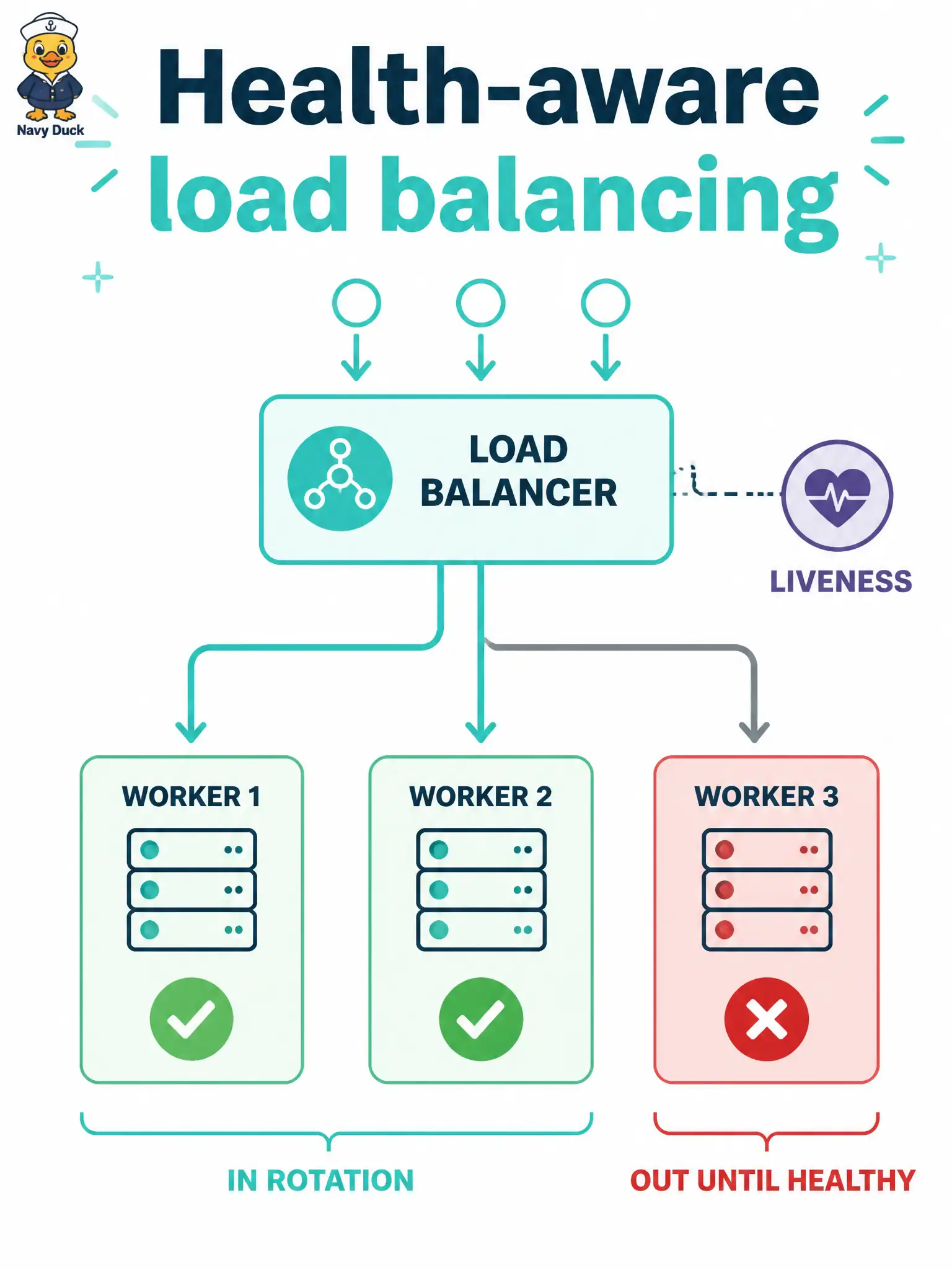
Short Explanation
Sending citizens to a closed window just multiplies complaints. Health-aware load balancing parks a sick worker until the probe says it is alive again. Blind round-robin to dead instances is the anti-pattern.
Full Explanation
Health-aware distribution removes workers that fail liveness or readiness probes from rotation until they recover. For a city parking portal, that means gateway errors and 5xx spikes from dead Cisco-API workers stop consuming clerk traffic; the balancer steers load to instances that still answer health checks. Probe-driven membership is what makes a pool resilient rather than merely large.
Blind round-robin that ignores probe results fails because it keeps spraying traffic at known-bad instances and multiplies user-visible errors. DNS-only failover that watches zone records but ignores process health fails because DNS TTL and record changes are too coarse for process crashes and do not reflect application liveness. Random fan-out with no probes fails because unhealthy workers never leave the pool and recovery under load is hope, not design.
Exam caveat: distinguish liveness (restart me) from readiness (do not send me traffic yet); a starting worker may be alive but not ready for Meraki or DNA Center calls.
Operational check: mark one worker's health endpoint to fail and confirm new portal requests stop landing there within the probe interval, then recover the probe and confirm re-entry to rotation.