
Requirements: agentless SSH to a large existing IOS XE estate and reuse of a mature play library. Which configuration-management choice best matches that technical constraint?
Select an answer to reveal the explanation.
Short Explanation
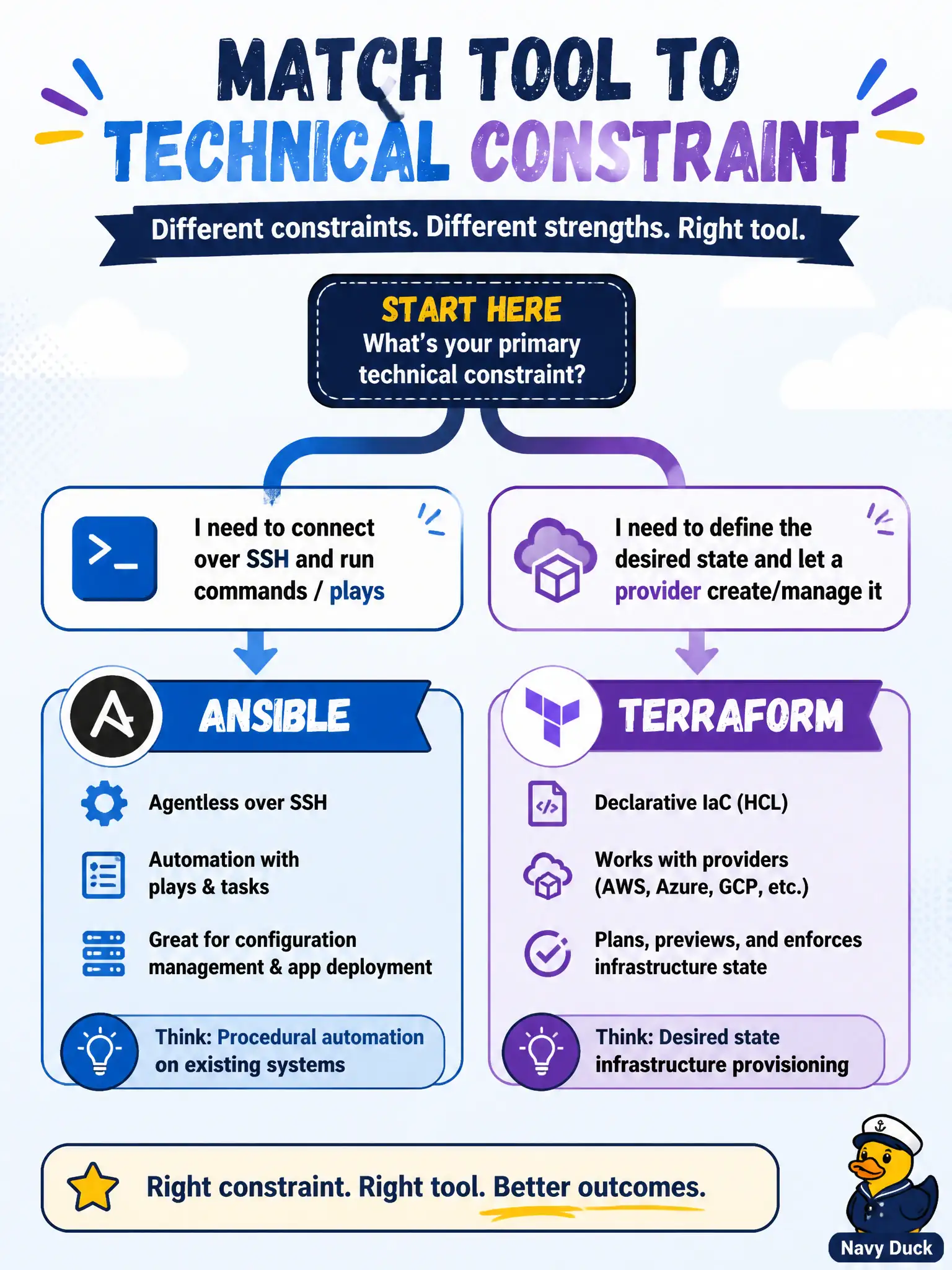
Match the wrench to the bolt: lots of plays and SSH-only boxes point to Ansible. Terraform shines when the constraint is declarative plan/state—not this play-library story.
Full Explanation
Configuration-management tool choice should follow technical constraints. When requirements call for agentless SSH to a large existing IOS XE estate and reuse of a mature play library, Ansible is the best match: it is agentless over SSH and models change as plays and tasks that municipal teams already maintain. That alignment matters more than fashion when hundreds of switches already answer to inventory-based plays.
Choosing Terraform alone because only plan/apply can use SSH plays confuses Terraform’s resource model with Ansible’s play strengths and ignores the existing play library requirement. Installing Puppet agents on every switch as the default DEVCOR pick fails agentless constraints and leans on a discarded primary. Treating NSO as mandatory whenever SSH inventory exists overscopes and is not required by the stated constraint set.
Exam caveat: Terraform can still be right when plan/state is the driving requirement; here the stem emphasizes agentless SSH plus plays. Hybrid use exists in industry, but the exam wants the best fit to the stated needs.
Operational check: map requirements to tool traits on a whiteboard (agentless, SSH, plays vs resources/state), then select Ansible for this constraint bundle and verify a sample play against lab inventory.