
Public-works networking wants IOS XE VLANs and static routes expressed as desired resources rather than an interactive SSH script. Which approach matches Terraform for DEVCOR 5.3.b?
Select an answer to reveal the explanation.
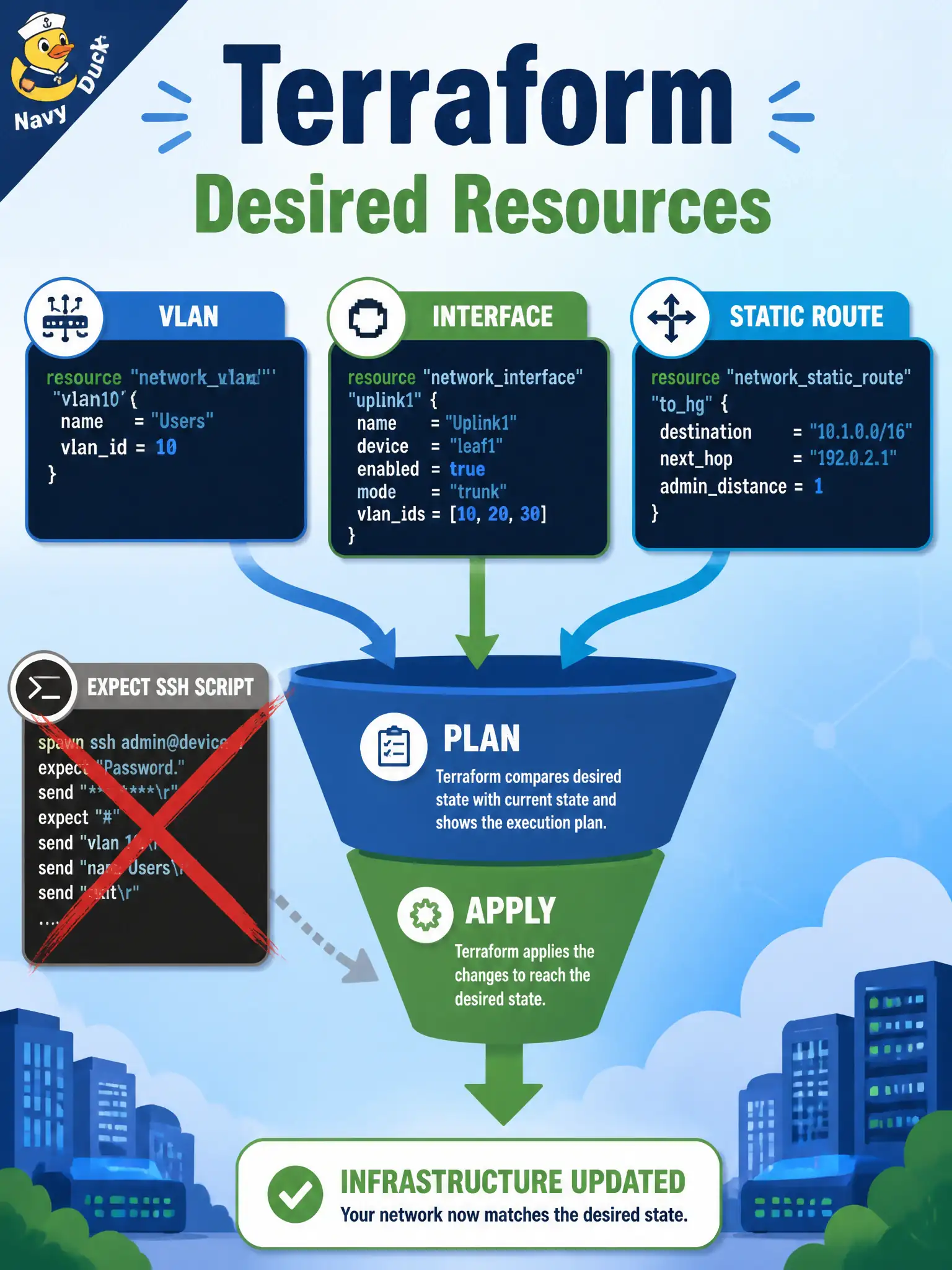
Short Explanation
Terraform is the blueprint on the drafting table—you name the VLAN or route you want, not a live typing script. Expect/SSH scripts are imperative, and Puppet is no longer the official 5.3.b answer.
Full Explanation
Terraform for DEVCOR 5.3.b expresses desired network parameters as declared resources in HCL, then plans and applies them. Public-works networking that wants IOS XE VLANs and static routes as desired resources—not an interactive SSH script—should declare the interface, VLAN, or route as Terraform resources in HCL and apply them through the Cisco/IOS XE provider workflow so state tracks ownership for the municipal estate.
Writing an Expect script that types vlan and ip route commands over SSH is procedural CLI automation, not Terraform resource construction, and it provides no first-class plan of creates and destroys. Authoring a Puppet manifest because Puppet is still the official 5.3.b tool fails v1.1 blueprint updates that replaced Puppet with Terraform for that item. Pasting raw IOS CLI into a null_resource local-exec as the primary construction dodges typed resources and loses the plan/state benefits the objective teaches.
Exam caveat: providers wrap device APIs or drivers—still Terraform resources, not “Ansible inside Terraform,” when the stem asks for Terraform construction. Keep credentials in provider configuration or environment variables, not committed into public HCL.
Operational check: write minimal VLAN and route resources, run terraform plan to preview the delta, apply to a lab IOS XE device, and confirm state lists the owned objects matching the switch.