
A city Ansible play targets group access_switches, but the repository has no inventory or dynamic source listing those hosts. What is wrong?
Select an answer to reveal the explanation.
Short Explanation
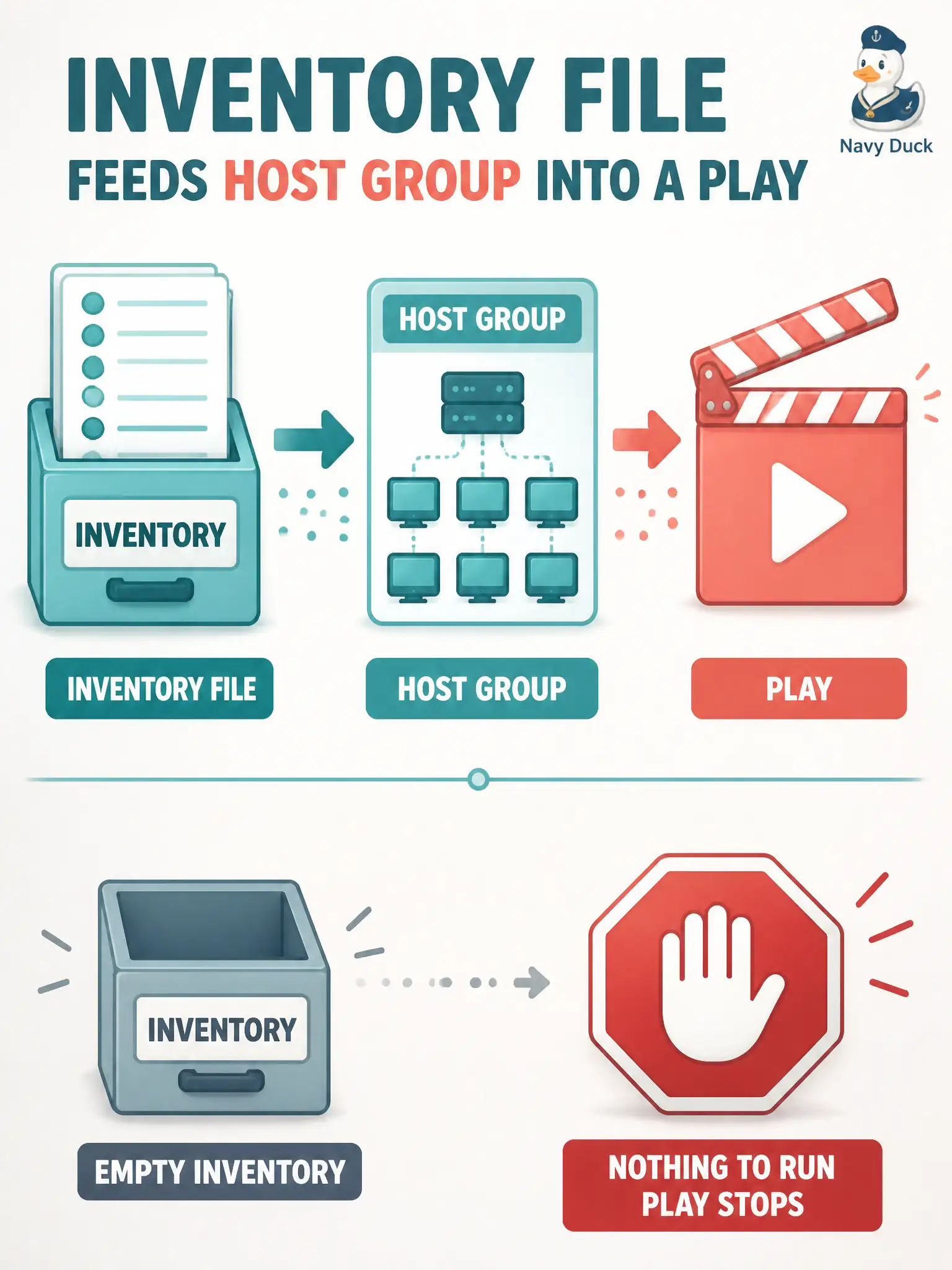
Without a guest list, the playbook party has nowhere to go—inventory names the IOS XE hosts and how to reach them.
Full Explanation
If a city Ansible play targets group access_switches but the repository has no inventory or dynamic source listing those hosts, the workflow is broken: inventory must list the hosts and how Ansible reaches them, or the play cannot configure the network. That diagnosis works because Ansible resolves hosts from inventory (static files, dynamic scripts/plugins, or automation controller inventories); without entries for access_switches, there is no connection target, credential mapping, or group membership for the play. Municipal automation therefore treats inventory as a required part of the 5.3.a workflow, not an optional footnote.
Claiming nothing is wrong because Ansible invents IOS XE neighbors from DNS automatically without inventory fails because Ansible does not auto-discover and group campus switches without an inventory source. Saying inventory is optional whenever Terraform state files exist nearby fails conceptually: Terraform state is not Ansible inventory. Claiming only Puppet requires inventory while Ansible plays never name hosts fails because Ansible plays explicitly target hosts/groups from inventory.
Exam caveat: inventory can be dynamic (CMDB plugin, controller inventory) and still satisfy the requirement—the absence of any host source is the defect, not the absence of a particular INI file name. Operational check: before the first production run, ansible-inventory --list (or controller UI) must show access_switches members with reachable ansible_host/connection data; fail the pipeline if the group is empty.