
Municipal automation must construct an Ansible workflow that configures network parameters on IOS XE switches. Which artifact matches the intended playbook workflow?
Select an answer to reveal the explanation.
Short Explanation
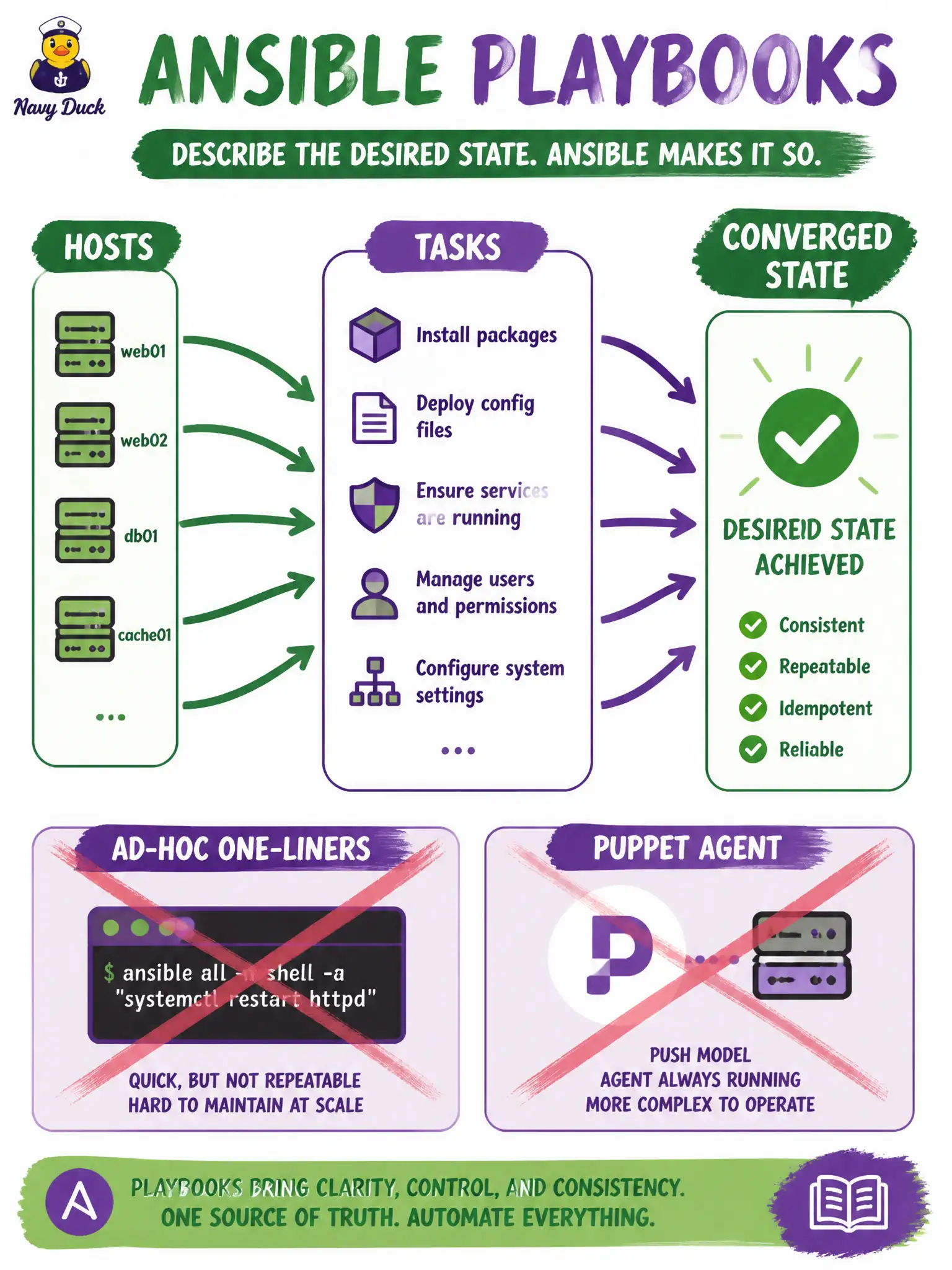
A playbook is the city’s checklist with named hosts and ordered tasks—not random one-liner shouts, a Puppet agent army, or a Terraform plan wearing an Ansible costume.
Full Explanation
Constructing an Ansible workflow that configures network parameters on municipal IOS XE switches means authoring a play that names the inventory group and a list of tasks that converge intended state. That artifact matches the intended playbook workflow because Ansible’s unit of structured automation is the play: hosts (or groups), optional vars, and ordered tasks that drive devices toward declared configuration. City automation teams get repeatable, reviewable changes from plays—not from disconnected one-liners.
A pile of unrelated ad-hoc ansible one-liners with no shared play structure fails because ad-hoc commands lack the durable playbook workflow 5.3.a describes for constructing network-parameter automation. A Puppet catalog that requires agents on every access switch fails conceptually: that is a different CM tool and agent model, called out as leftover thinking relative to Ansible network plays. A Terraform plan file used as the sole 5.3.a answer fails because Terraform is a different blueprint noun (often 5.3.b territory); it is not the Ansible playbook workflow this item asks for.
Exam caveat: a minimal correct play can be short—group name plus a few cisco.ios tasks—fair items do not require dumping a multi-environment production YAML from memory. Operational check: run the play against a lab inventory group first with check mode, confirm hosts resolve and tasks report intended VLAN/interface/route changes, then apply during the civic change window with the same playbook artifact.