
When addressing a VLAN over RESTCONF on IOS XE, what role does the VLAN identifier play versus the display name?
Select an answer to reveal the explanation.
Short Explanation
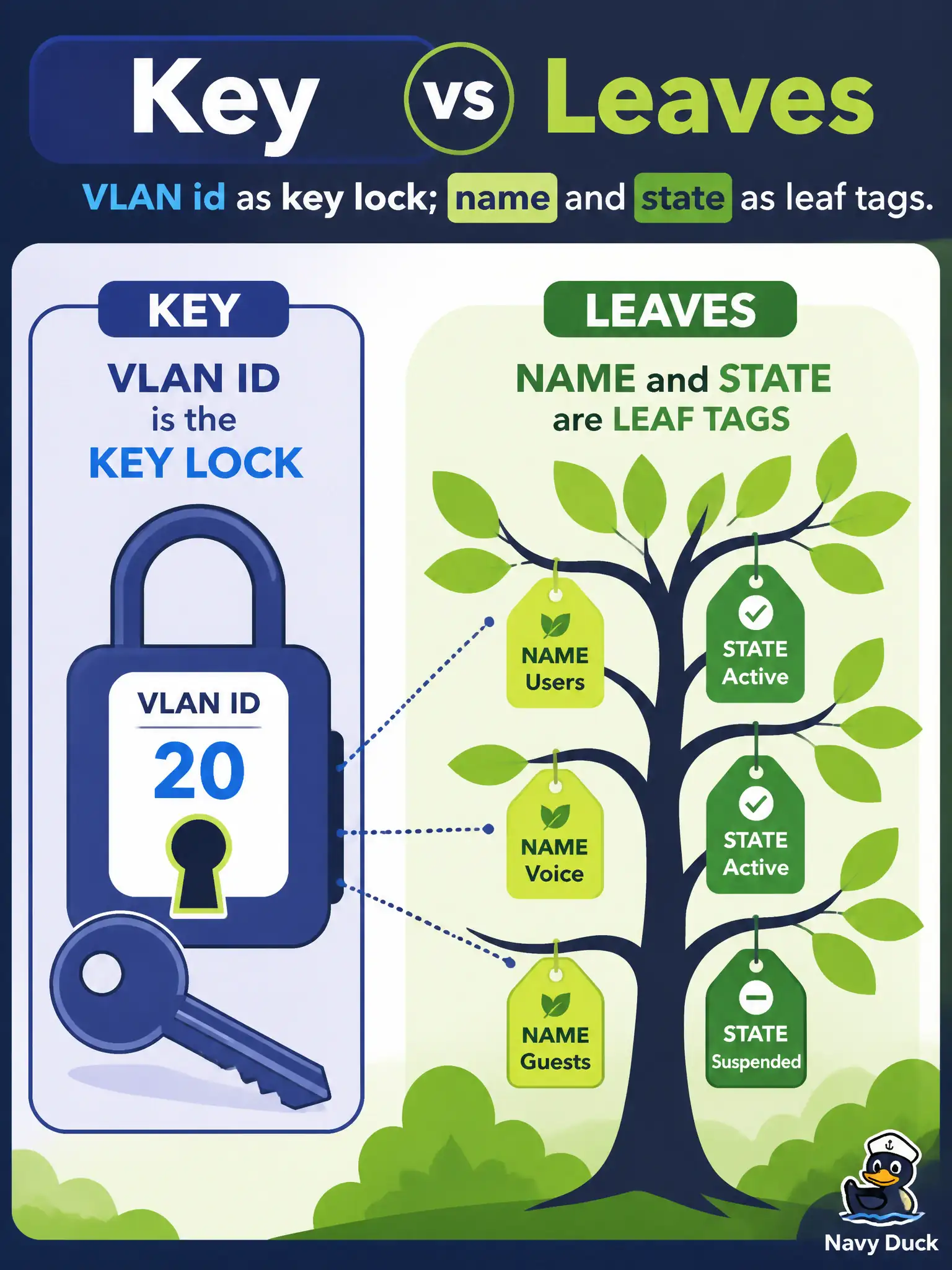
The VLAN number is the apartment address; the friendly name and active/suspend are furniture you rearrange inside—don’t swap which one unlocks the door.
Full Explanation
When addressing a VLAN over RESTCONF on IOS XE, the VLAN identifier is the list key in the path, while the display name and active/suspend state are configurable leaves you merge. That role split works because YANG lists select instances by key: city automation builds /…/vlan=<id> (or the native equivalent) to name which VLAN, then PATCHes descriptive and state leaves inside that instance. Treating id as the address and name/state as editable attributes matches how RESTCONF resources are constructed and updated.
Treating the display name as the only valid URI key with a decorative numeric id fails because the model keys on vlan-id; friendly names are not the primary list key and can change without relocating the resource. Omitting both id and name so RESTCONF auto-numbers VLANs fails conceptually: VLAN creation still requires an explicit identifier in normal IOS XE VLAN models, and auto-numbering is not how keyed RESTCONF creates work here. Making state the resource key while storing vlan-id only in Syslog fails because operational/admin state is a leaf, not the list key, and Syslog is not the datastore.
Exam caveat: renaming a VLAN changes a leaf; renumbering is effectively a different key and usually means create-new/delete-old rather than a casual rename of the id. Operational check: always put vlan-id in the RESTCONF path for reads and writes, keep name/state in the body for merges, and verify after PATCH that GET by id returns the updated name without creating a duplicate VLAN entry.