
A collector opens a dynamic (dial-in) telemetry subscription to an IOS XE device. After the collector disconnects and the device reloads, no stream resumes until the collector returns. What consumption trait does this illustrate?
Select an answer to reveal the explanation.
Short Explanation
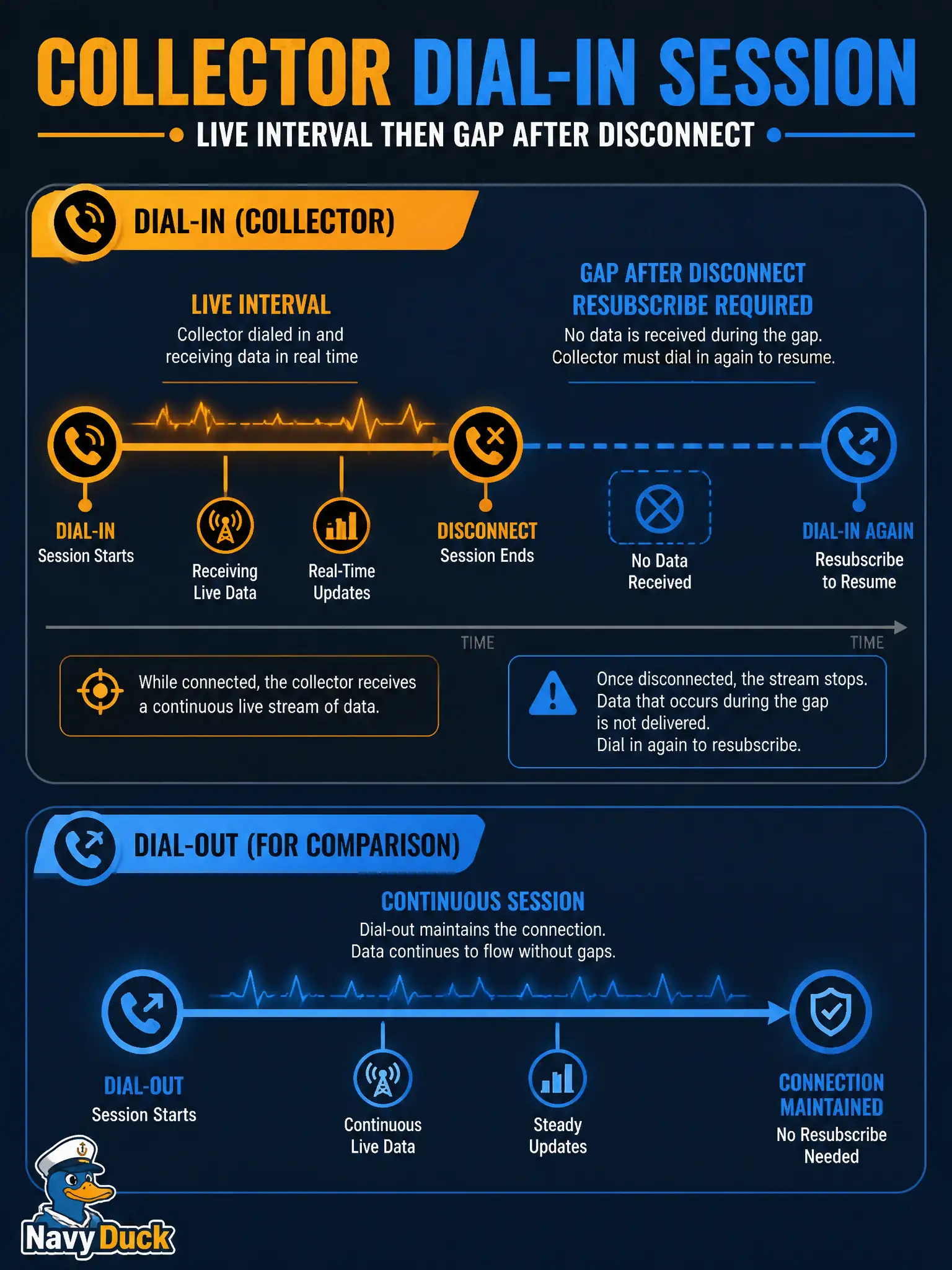
Dial-in is a phone call: when either side hangs up, the briefing stops until you call again. Session-scoped subscriptions do not survive disconnect the way configured dial-out can.
Full Explanation
Dynamic dial-in subscriptions last only as long as the collector’s session. After the collector disconnects and the IOS XE device reloads, no stream resumes until the collector returns and subscribes again. That session-scoped lifetime is the consumption trait the item illustrates for civic telemetry labs.
Claiming dial-in subscriptions are permanently stored in startup-config like dial-out receivers fails: dynamic subscriptions are not the configured persistent receiver model. Asserting dial-in always converts automatically into dial-out without reconfiguration invents a behavior operators cannot rely on. Saying dynamic subscriptions ignore session state and continue publishing to any past collector IP forever contradicts session teardown and reload clearing.
Exam caveat: some environments deliberately use dial-out for persistence across collector restarts; choose based on who initiates and what must survive reload. Document which subscriptions are dynamic vs configured for NOC runbooks.
Operational check: establish dial-in, disconnect the collector, reload the device, and confirm no publications flow until the collector subscribes again—contrasting with a configured dial-out test.