
What three-job order should a constructed DNA Center wireless-health Python script follow?
Select an answer to reveal the explanation.
Short Explanation
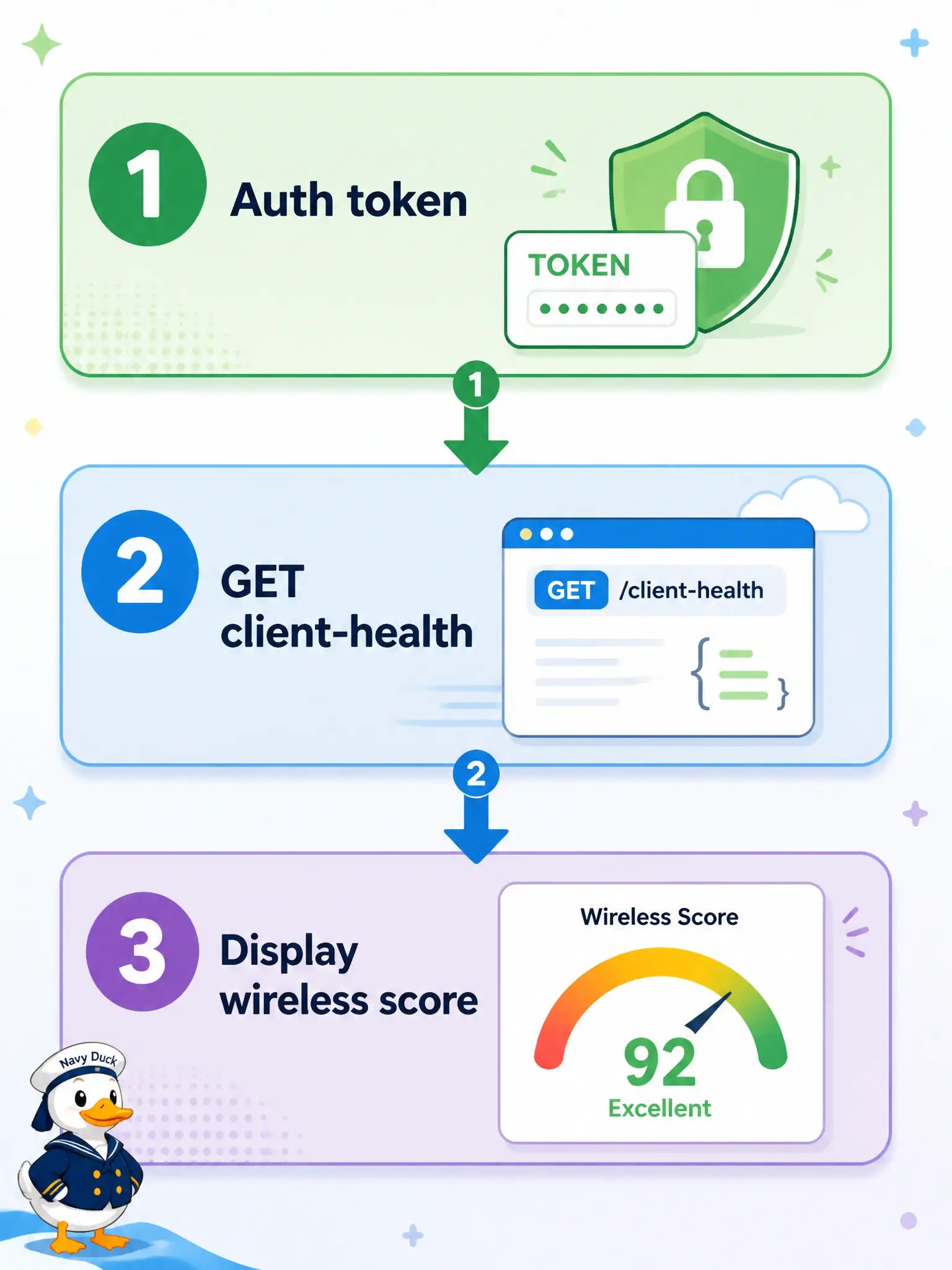
Badge, fetch, show—token first, client-health GET second, wireless fields on the screen third. Any one step alone leaves the job unfinished.
Full Explanation
A constructed DNA Center wireless-health Python script follows authenticate → GET client-health → display wireless score fields. Token acquisition unlocks Intent; the GET fetches assurance data; display walks scoreDetail for wireless so civic operators see the numbers. Completing any one hop alone leaves the municipal job unfinished and the NOC without a trustworthy wireless health view.
Displaying first from cached JSON and authenticating only if print fails inverts dependencies and risks serving stale or unauthorized data as if it were a live Intent retrieve. Only POSTing auth/token without a further GET fails because a token alone does not retrieve or show wireless scores. Treating full requests exception-hierarchy mastery as the scored item fails the task focus: solid error handling helps operations, but the exam constructed story is auth, retrieve, and wireless display in that order.
Exam caveat: “display” must target wireless fields specifically—printing the entire JSON root or only wired categories after a correct GET still misses the wireless-health outcome the script was built to deliver.
Operational check: enforce the three steps as separate functions with clear exit codes, refuse to parse if auth failed, assert wireless scoreValue is present in stdout before the civic cron marks success, and log which controller host supplied the token and health payload.