
What depth does DEVCOR expect for a constructed UCS Manager Python provision script?
Select an answer to reveal the explanation.
Short Explanation
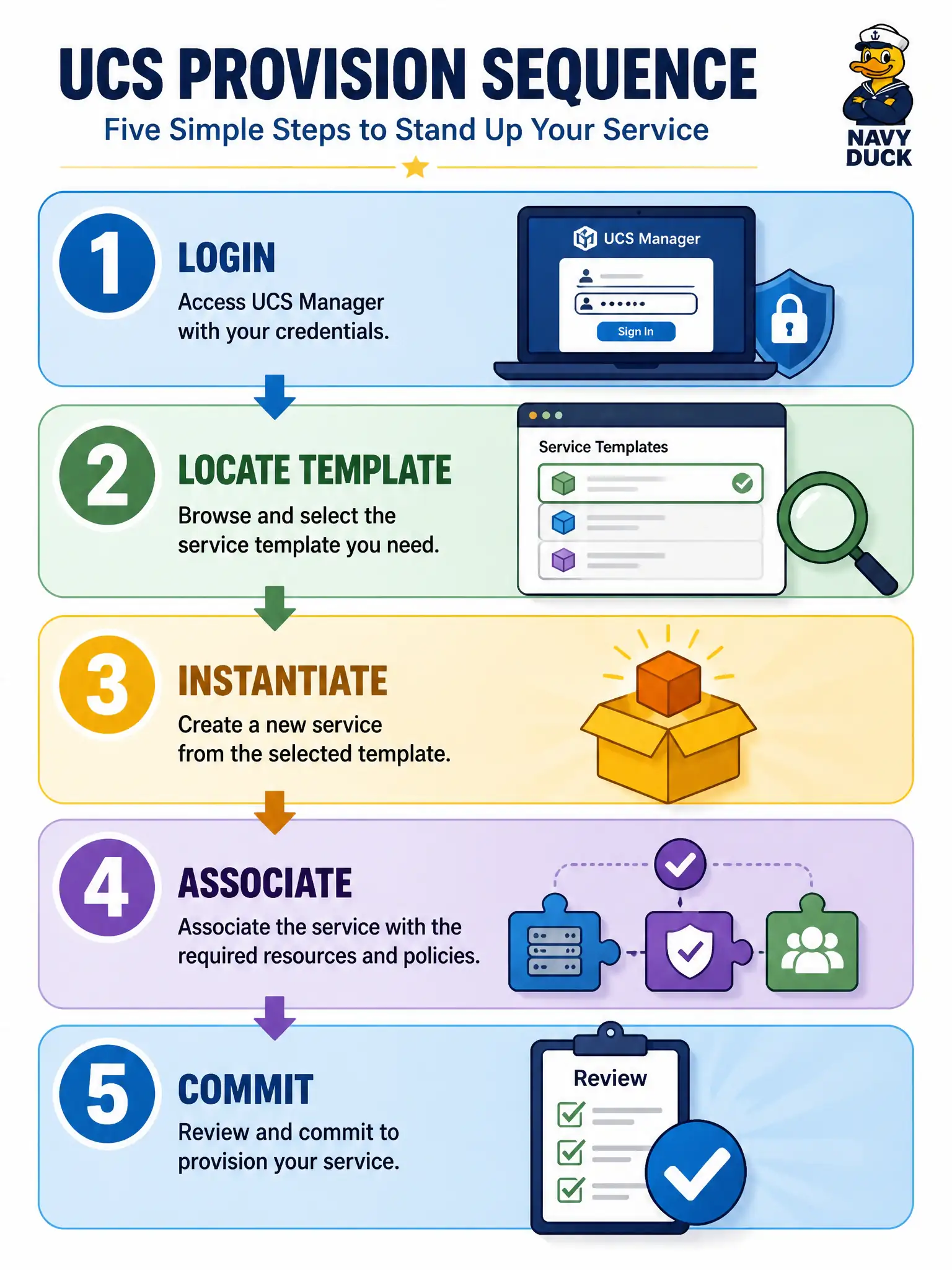
Think recipe card, not cookbook reprint: login, find the template, instantiate, associate, commit—the calls and objects matter more than import trivia.
Full Explanation
DEVCOR’s constructed UCS Manager Python provision depth is the object workflow: obtain a login handle, locate the template managed object, instantiate a named LsServer from that template, associate it to a server, then commit. That sequence is what “provision from a template” means in exam terms—calls and managed objects, not trivia about every import line.
Memorizing and pasting every ucsmsdk import in exam order with no object focus fails the constructed intent: imports without the login→template→instantiate→associate→commit story do not provision. Stopping after only aaaLogin fails because a cookie without instantiate/associate/commit leaves no new bound profile. Dumping every LsServer attribute from the SDK reference fails as the scored depth—exhaustive class dumps are study aids, not the operational provision path.
Exam caveat: commit (or the SDK equivalent that pushes the transaction) is easy to forget after associate; an uncommitted association can look successful in memory while the FI never applies the identity.
Operational check: script the five beats as explicit steps with failure stops, log the new profile DN and associated server DN, and verify post-commit state in UCS Manager before marking the municipal change complete.