
After a library branch retires a kiosk network object, automation must remove it from FDM. Which delete construction is correct?
Select an answer to reveal the explanation.
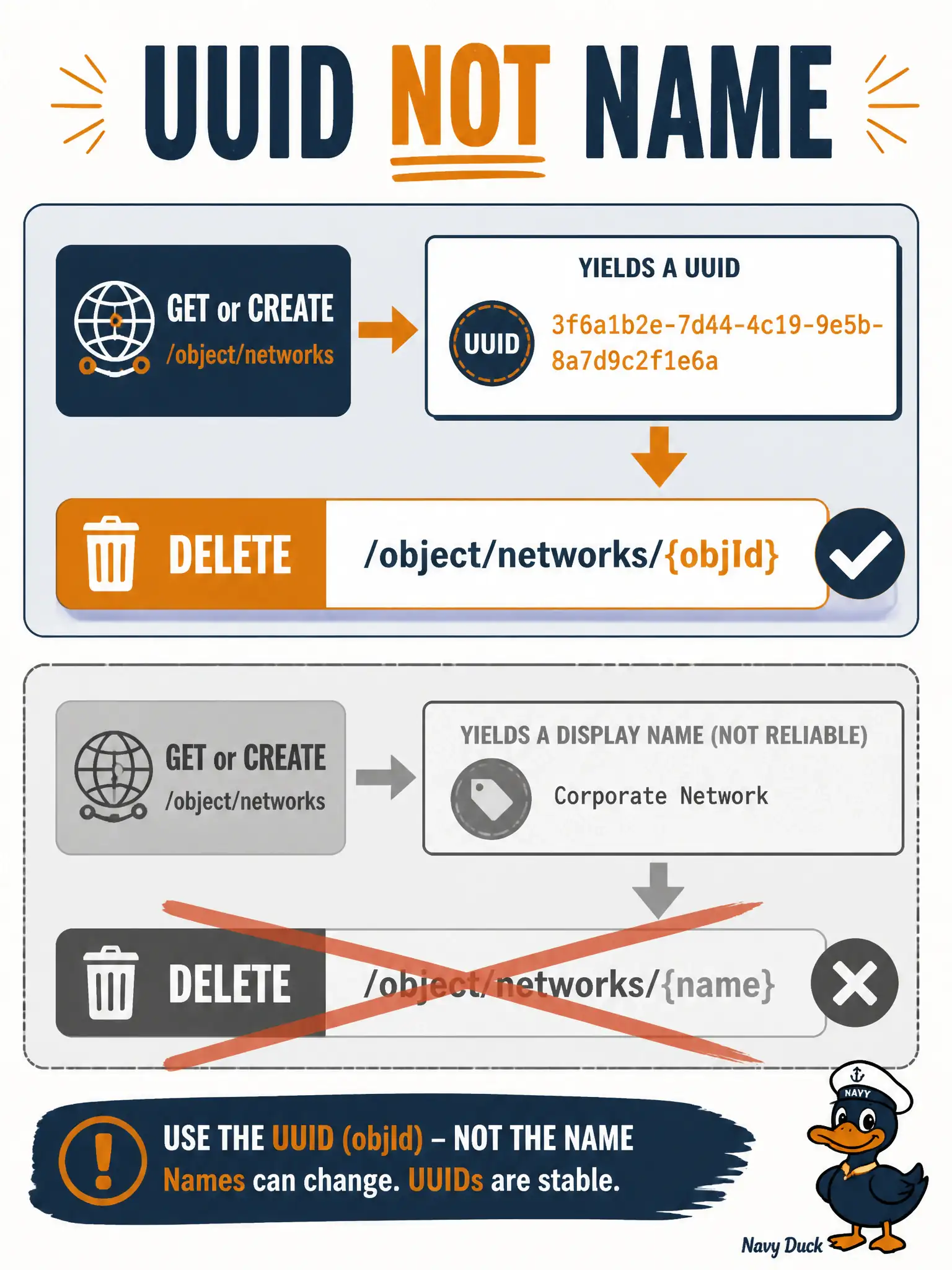
Short Explanation
Delete needs the object’s UUID, not the friendly name painted on the door. Get (or create) first, then DELETE by that id—success is typically empty/204-class, not a new object body.
Full Explanation
When a library branch retires a kiosk network object, FDM delete is keyed by object identity, not by friendly display naming alone. The correct construction is DELETE /object/networks/{objId} where {objId} is the UUID returned from a prior GET list/detail or from the original create response. Successful deletes typically return an empty body with a 204-class status rather than a new object representation, which matches resource-oriented delete behavior.
POST /object/networks with a delete:true flag and a display name fails because create-shaped POSTs are not the delete verb, and FDM does not treat a boolean delete flag plus name as the official remove construction. DELETE /object/networks/Library-Kiosk-Host using the display name as {objId} fails identity resolution: path ids are UUIDs (or the API’s object identifiers), not human labels painted on the object. Repeated GET /object/networks/{objId} until the body “empties itself” fails because GET is read-only and never performs delete.
Exam caveat: objects still referenced by access rules, or marked system-defined, will refuse DELETE until references are cleared or the object is recognized as immutable—see related failure handling.
Operational check: GET the object by name filter or list, copy the exact id, DELETE that id, then GET again (or list) to confirm absence before running deploy so retired kiosk addresses leave the staged policy.