
Which practice best describes the benefit of continuous testing in the city’s CI pipeline for a Meraki automation repo?
Select an answer to reveal the explanation.
Short Explanation
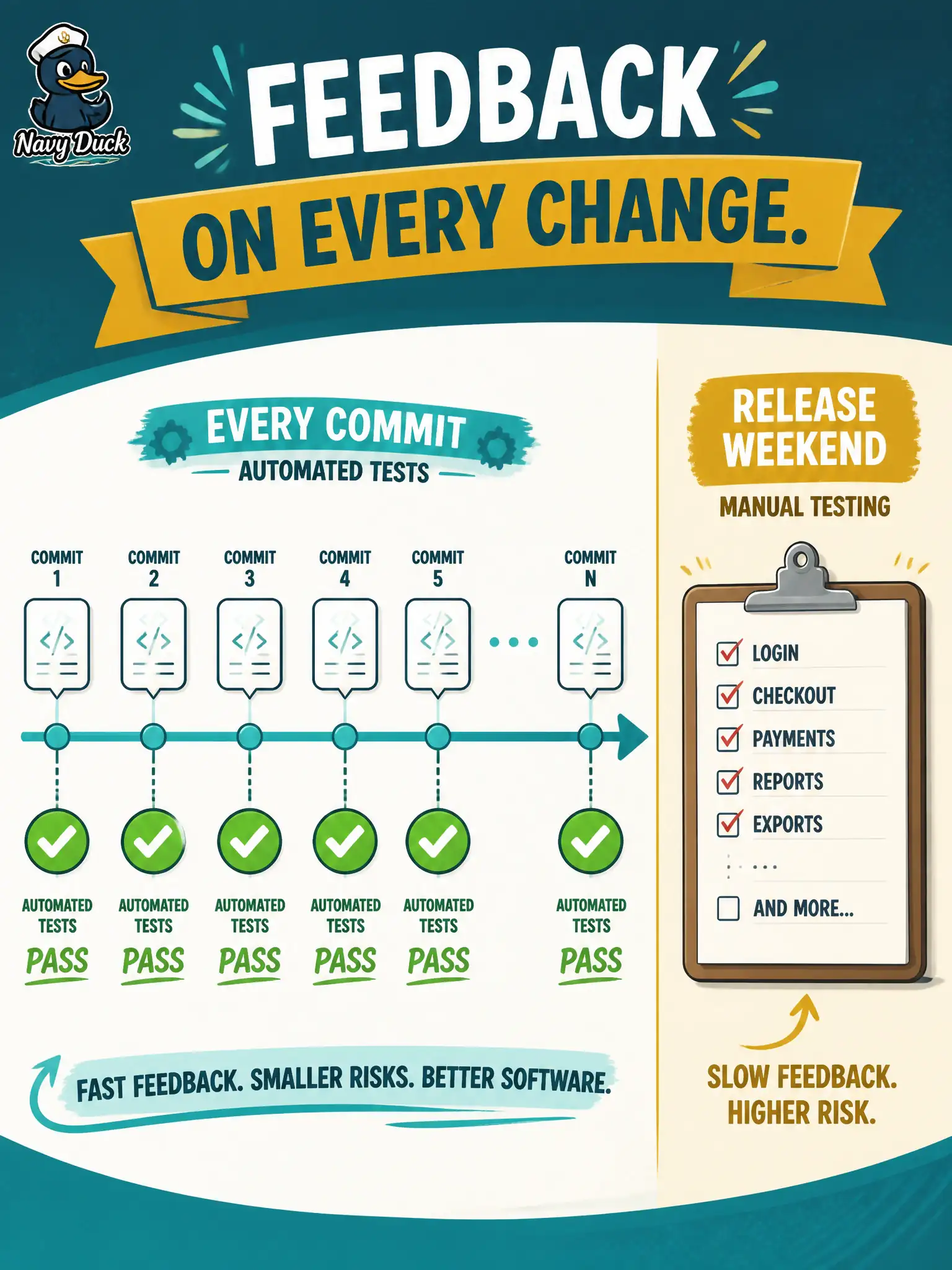
Every bus that leaves the depot gets the same checklist—not just the holiday express. Continuous testing means each change gets the automated suite in CI, not a late manual night-before ritual.
Full Explanation
Continuous testing for the city’s Meraki automation repo means running the same automated suite on every commit or change in CI, not only on a release weekend. The benefit is a repeatable signal on each change so regressions surface while the diff is still small and cheap to fix. That cadence—every bus leaving the depot gets the checklist—is what distinguishes continuous testing from occasional human gates in municipal delivery.
Running the suite only during a human-led change window the night before production is batch testing, not continuous testing. Skipping automated tests and relying solely on production monitoring after promote moves discovery to users and outages. Diagnosing one red install log as the definition of continuous testing confuses a single failure class with the practice of repeatedly executing the suite on each change.
Exam caveat: continuous testing is about when and how often the suite runs in CI, not about substituting install-log triage for tests or renaming a one-off debug session. Operational check: confirm the Meraki repo’s pipeline triggers the same test job on each commit or merge, fails the build on red results, and does not wait for a release weekend to execute the suite.