
A municipal CI job fails during install with “Could not find a version that satisfies the requirement requests==2.31.0” while unit tests never start. What is the correct diagnosis?
Select an answer to reveal the explanation.
Short Explanation
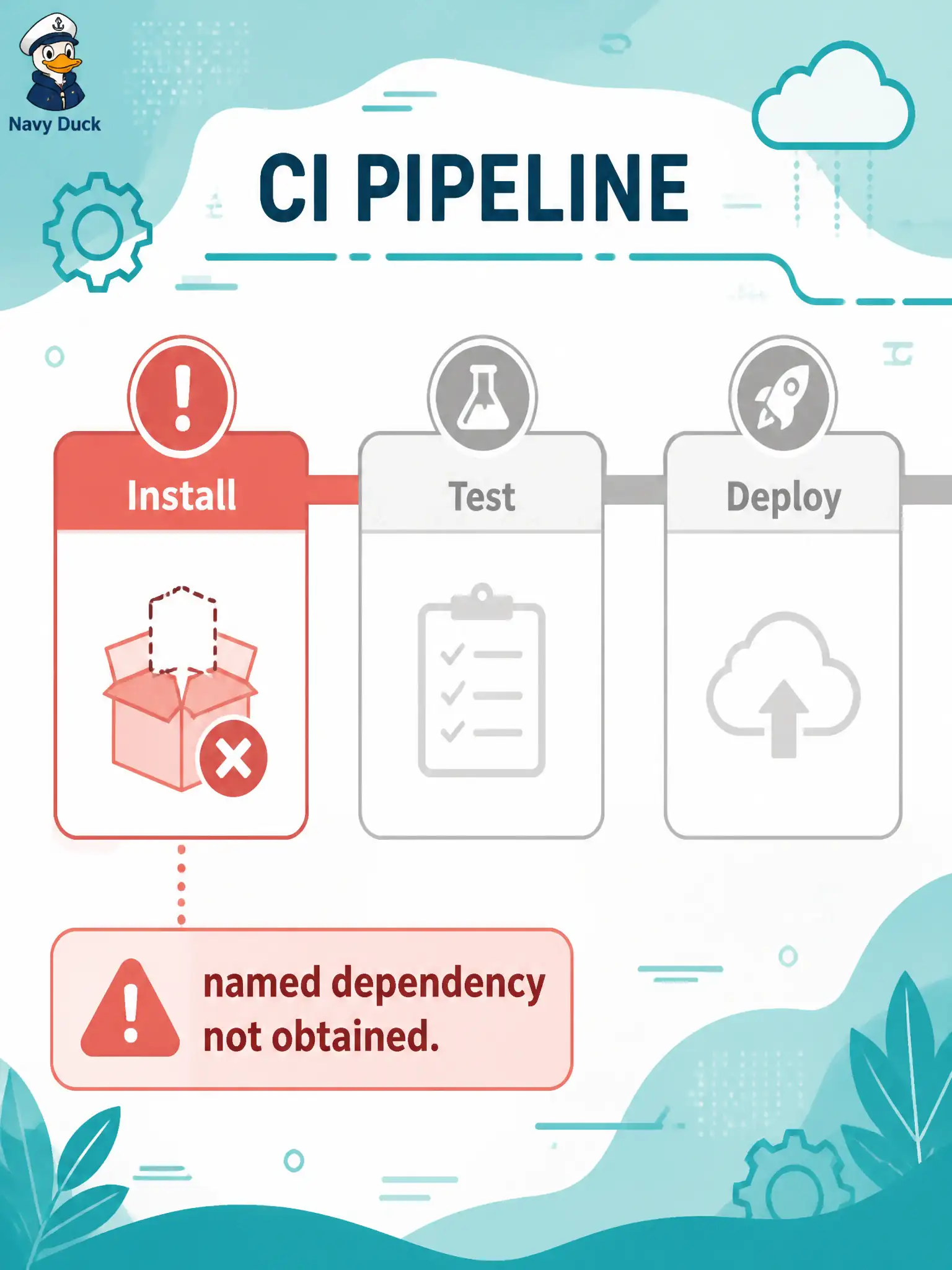
If the grocery run never finds the listed item, dinner never starts—the failure is missing dependency, not a bad taste test. Install could not obtain the named package; assertions and cluster deploys are later chapters.
Full Explanation
The message “Could not find a version that satisfies the requirement requests==2.31.0” during install, with unit tests never starting, means the pipeline could not obtain a named dependency declared for the install stage. Diagnosis belongs at dependency resolution: the installer never produced a consistent environment, so later test and deploy stages correctly never ran. For municipal CI on automation repos, that distinction matters—missing or unsatisfiable pins are install failures, not test logic bugs.
A wrong expected status code in a unit-test assertion would appear only after dependencies installed and the suite executed; here tests never start, so assertion content is irrelevant. Two packages refusing to share a virtualenv after a successful pip install describes a post-install conflict scenario, but this log never reaches a successful install—the named requirement itself could not be satisfied. A Kubernetes API rejection of a Deployment for a drifted Service name is a cluster-apply problem far downstream of install; nothing in the failure indicates kube-apiserver involvement.
Exam caveat: DEVCOR expects you to classify the failure stage from the log signature—unsatisfiable requirement text points to install/dependency obtainment, not to tests or Kubernetes. Operational check: reproduce the install stage with a clean cache, confirm the exact pin appears in requirements, and verify the index or mirror can actually serve that version before reopening test jobs.