
A zoning microservice times out a hung GIS dependency, retries carefully, and requires POSTs to be idempotent. What should the automated suite include?
Select an answer to reveal the explanation.
Short Explanation
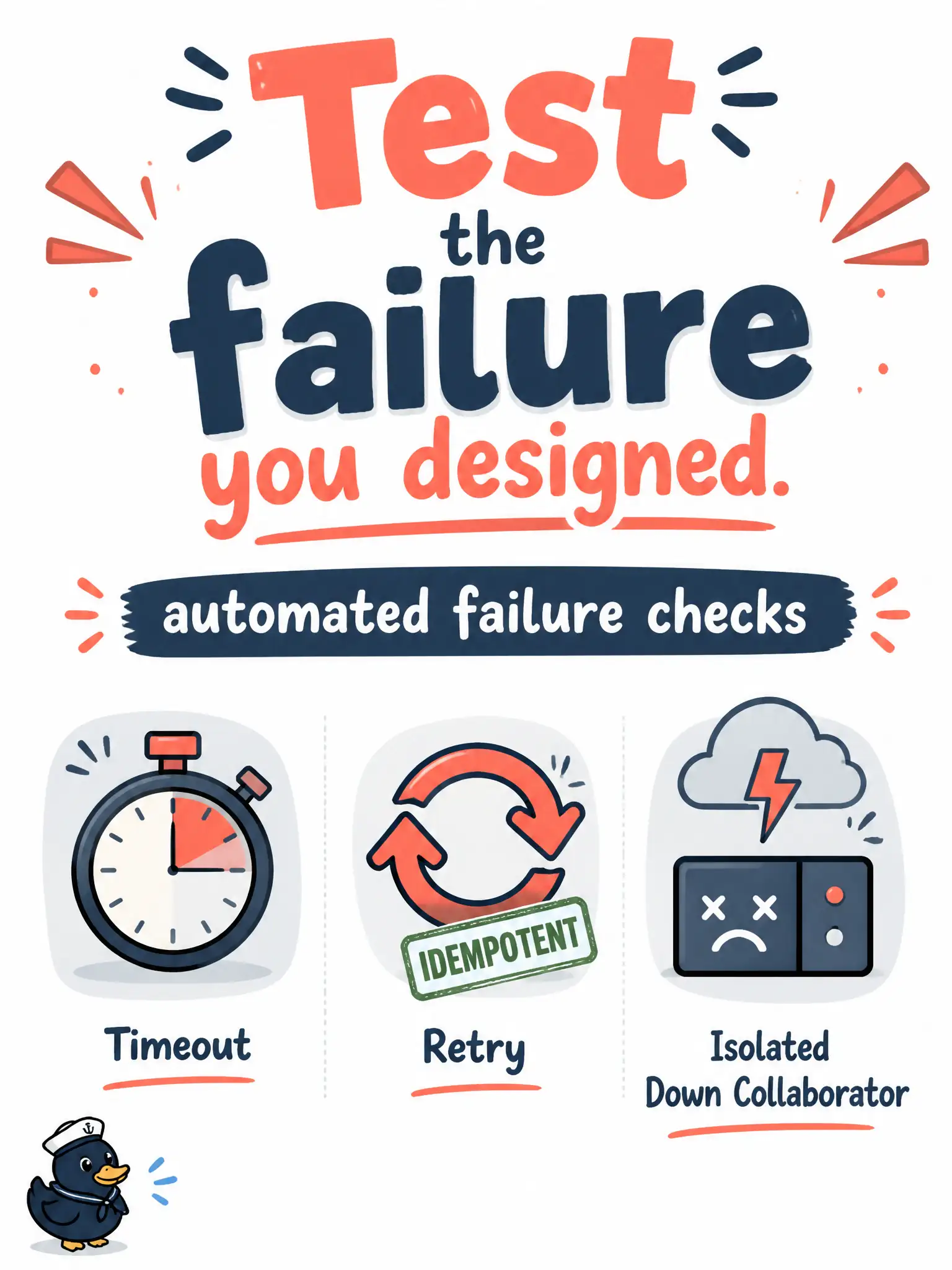
If the map office freezes, the zoning desk must not freeze with it—and a retried form must not double-charge. Those designed failures need automated checks, not hope.
Full Explanation
A zoning microservice that times out a hung GIS dependency, retries carefully, and requires POSTs to be idempotent must encode those designed failures in automated checks. The suite should prove a hung collaborator does not hang the caller forever—timeouts and circuit behavior fire—and that retried POSTs remain safe because the handler is idempotent (no double-charge or duplicate zoning action). Resilience that exists only in design docs is not resilience under change.
Happy-path unit tests that never simulate a slow or failing collaborator fail by concept: they cannot catch hang-forever or double-apply bugs. Mandating a third-party chaos-platform product that the 1Z0-1084 exam does not name as a required tool fails as an exam answer and as a necessity—timeout and idempotency checks do not require a branded chaos vendor. Load-generator marketing demos without assertions on timeout or retry behavior fail because traffic without assertions proves little about hung dependencies or safe retries.
Exam caveat: resilience testing is about asserted timeouts and idempotent handlers, not product name-dropping. Operational check: inject a delayed or failing GIS double in CI, assert the caller returns within the timeout budget, replay the same POST with the same idempotency key, and confirm a single business effect.