
After a parks-reservation service rolls out a new revision on OKE, which post-deploy checks best prove the new revision actually serves?
Select an answer to reveal the explanation.
Short Explanation
After the new desk opens, check that the right clerk is at the window and that a few citizen requests still succeed. That is a test of the deployed unit, not a pipeline-architecture essay.
Full Explanation
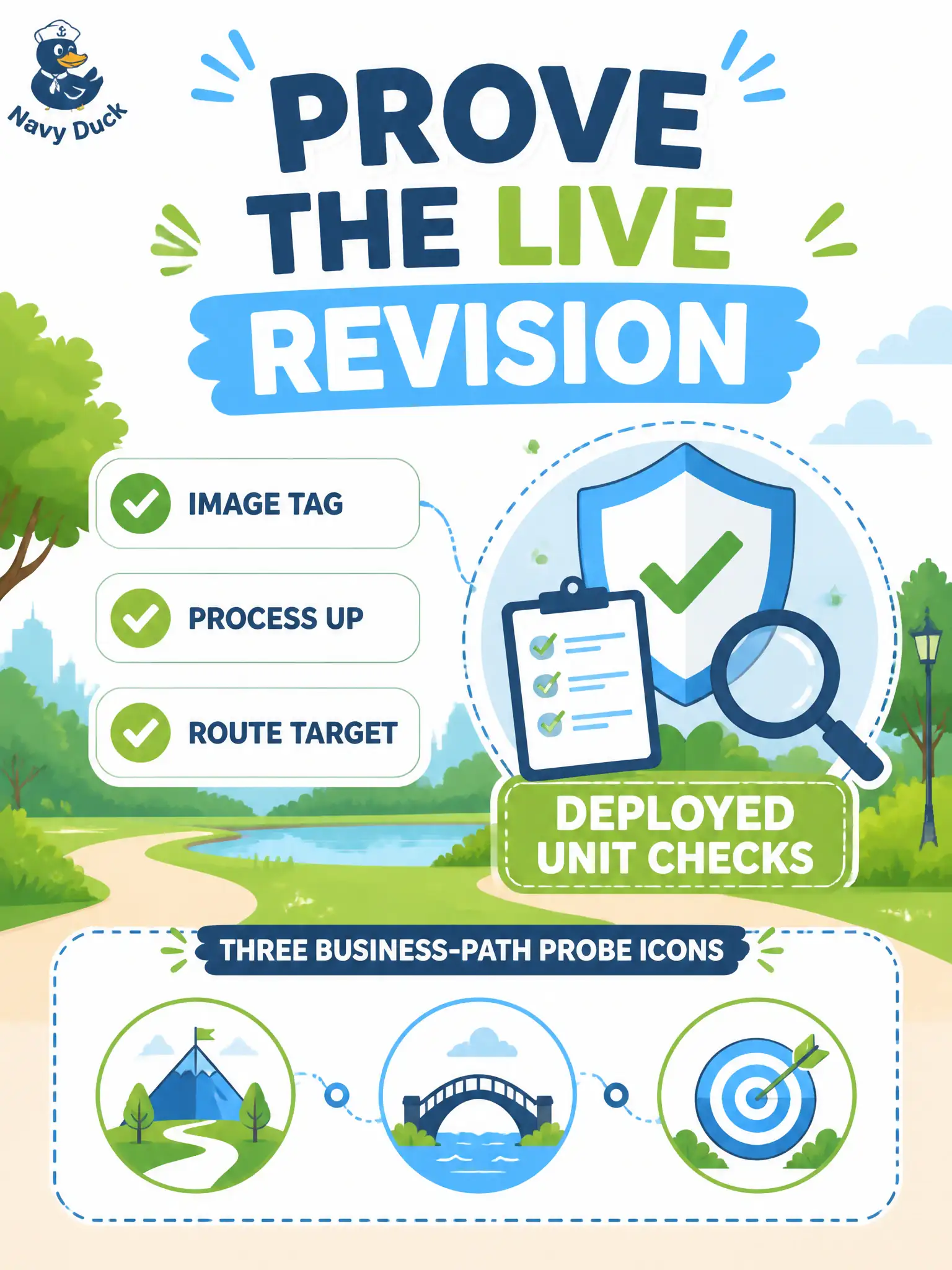
After a parks-reservation service rolls out a new revision on OKE, post-deploy proof means confirming the live revision—right image digest or tag, process up, Service/Ingress or route pointing at it—and running a small set of business-path probes against that revision. Those checks answer whether citizens actually hit the new code, not whether a pipeline diagram looks correct on paper.
A Terraform plan diff that never probes the live process or business paths fails by concept: plan output is intent, not runtime verification. A blue/green pipeline architecture redesign without checking the live revision fails because architecture essays do not prove which ReplicaSet or revision is serving. Static Dockerfile lint of an old tag that is not the serving image fails because linting yesterday’s file does not validate today’s rolled-out pods.
Exam caveat: post-deploy checks are about the live revision and thin probes, not re-litigating pipeline topology. Operational check: after rollout, compare the Deployment’s running image to the expected digest, curl or invoke a reservation create/read path through the exposed route, and alert if the process is down or the route still pins an old revision.