
A licensing microservice must hand independently processed transactional jobs to worker services without treating the traffic as an analytics log or as OCI resource automation. Which OCI service fits that consume-and-complete inbox?
Select an answer to reveal the explanation.
Short Explanation
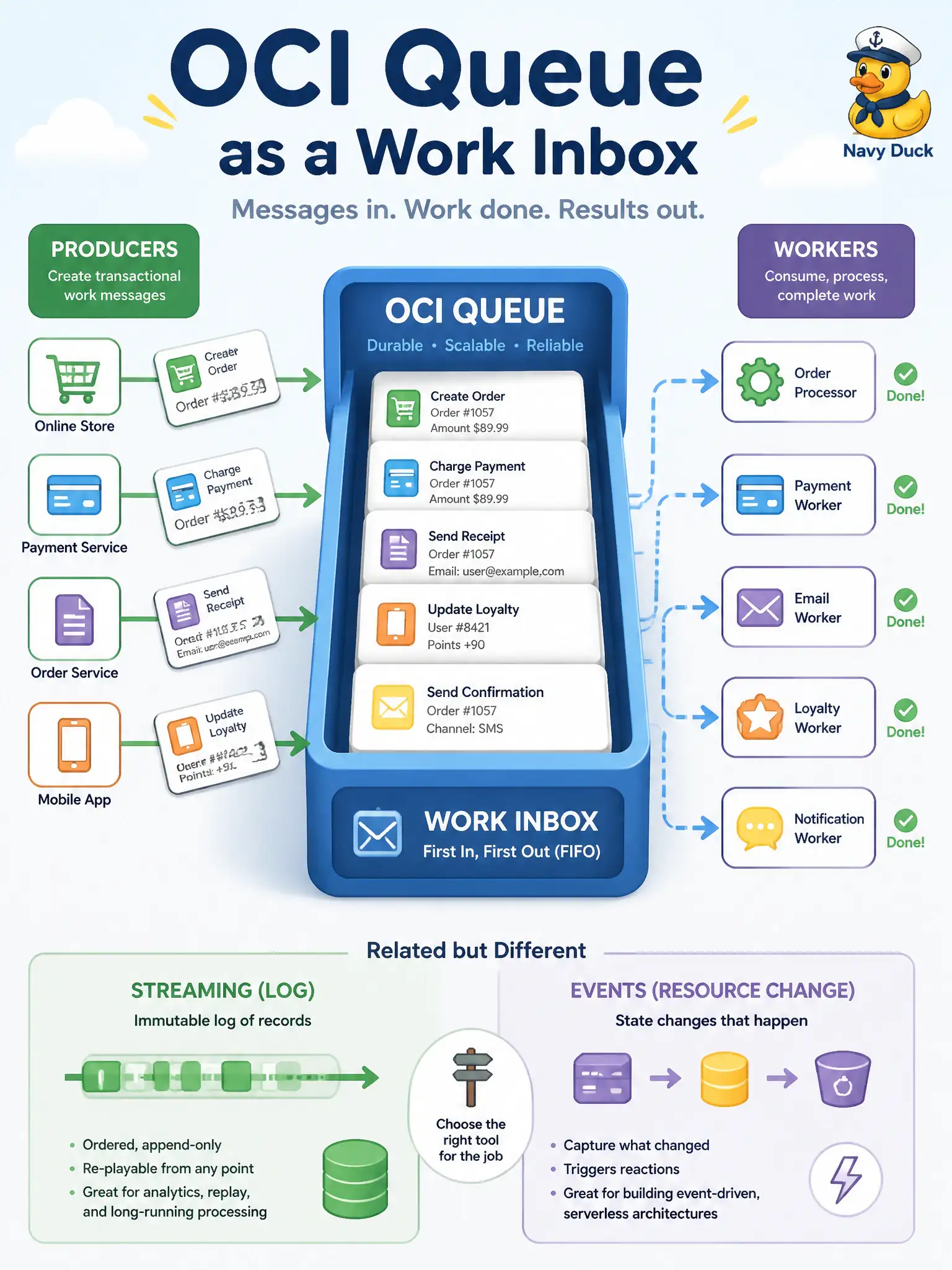
Queue is the managed inbox for transactional messages that workers process one by one and complete. Producers publish a string payload in an agreed format. It is not Streaming’s replayable analytics log and not Events’ resource-state channel.
Full Explanation
The licensing microservice that must hand independently processed transactional jobs to worker services—without treating traffic as an analytics log or as OCI resource automation—fits OCI Queue. Queue is a managed serverless service for high-volume transactional messages: producers publish string payloads in an agreed format, consumers process units of work independently, and successful completion removes the message from the inbox. That consume-and-complete shape matches municipal licensing jobs that should not linger as a replayable telemetry bus. OCI Events is wrong here because every microservice job is not an OCI-emitted CloudEvent; Events targets resource-state changes OCI publishes, not application work tickets. OCI Streaming alone because Queue cannot carry JSON or XML string payloads is false—Queue carries producer-defined string bodies, while Streaming’s strength is partitioned append/replay for analytics-style buses rather than transactional inbox semantics. Using the Oracle Functions configuration store as a durable shared work inbox invents a messaging product Functions does not provide. Exam caveat: Queue retention (seconds to days within documented bounds) means undeleted jobs can expire; long-running municipal backlogs need retention and dead-letter planning, not infinite keep. Operational check: publish a sample licensing job, consume it from a worker, delete after success, and confirm a second consumer does not receive the same message—validating transactional completion rather than stream-style replay.