
A city-council meeting chat pipeline creates a new OCI Streaming stream for live reactions. Operators need the valid retention window, the default, and whether retention can be changed later. Which statement is correct?
Select an answer to reveal the explanation.
Short Explanation
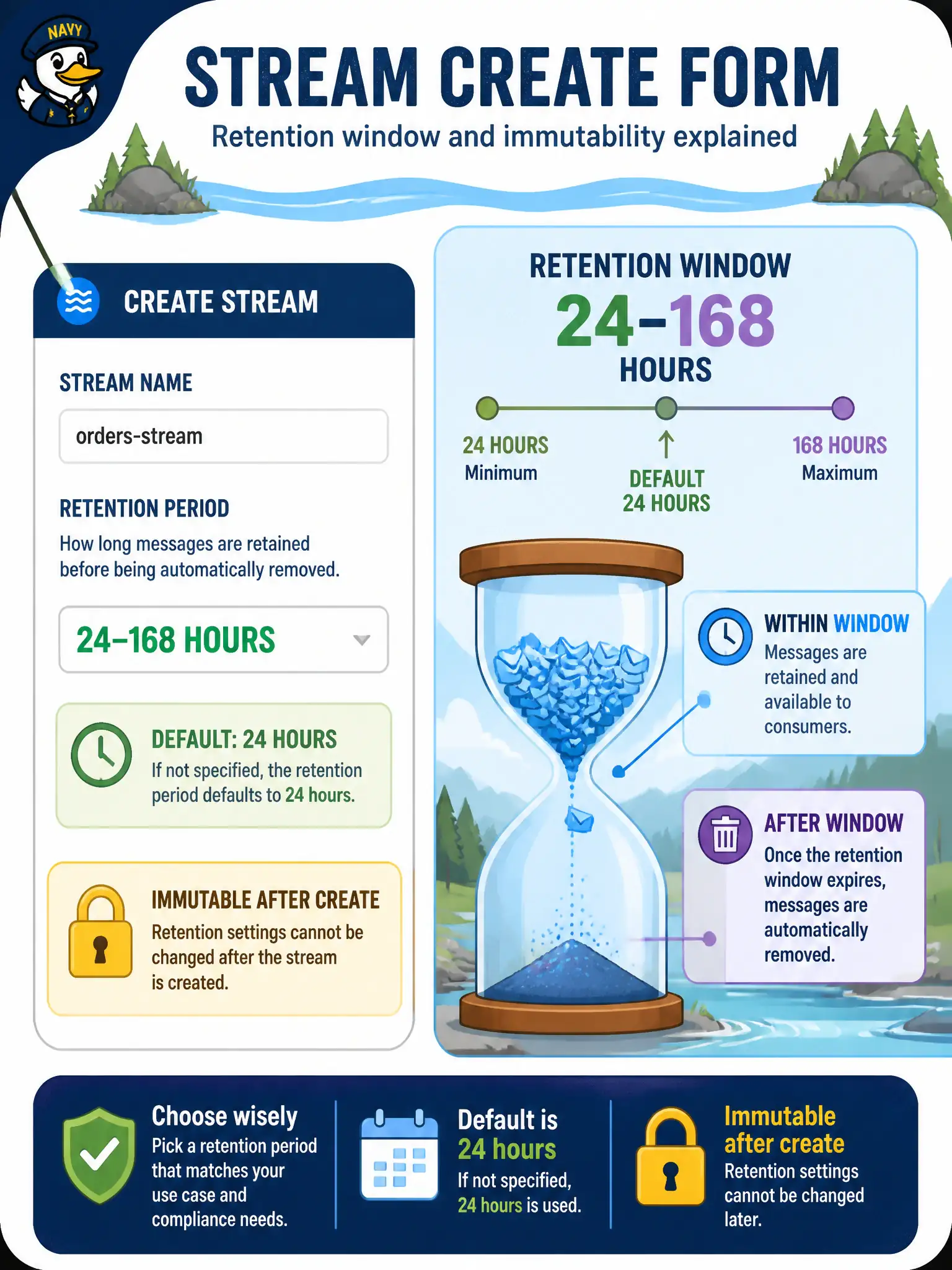
Think of retention as a whiteboard the facilities crew erases on a schedule you pick only when the board is installed—24 to 168 hours, default one day, and you cannot repaint the schedule afterward. After the window, messages are gone whether or not anyone read them. Longer hold or consume-and-delete semantics need another service or a Connector Hub sink—not a hidden Streaming flag.
Full Explanation
When you create an OCI Streaming stream, retention must be between 24 and 168 hours (seven days). The default is 24 hours. Retention cannot be changed after the stream exists—treat it like a facilities schedule painted on the whiteboard only at install time. After the window elapses, messages are removed whether or not consumers have read them. For a city-council meeting chat pipeline, pick the retention that matches how long late joiners or auditors need live reactions before create, because you cannot extend it later on that stream.
Defaults of 30 days raisable to one year after create invent Object Storage–like lifecycle numbers that do not apply to Streaming retention. Fixing retention at seven minutes based on Function timeout confuses function execution limits with stream log retention. Unlimited retention when Kafka auto-create is enabled on the pool is false; auto-create does not remove the 24–168 hour constraint.
Exam caveat: longer hold or consume-and-delete semantics require another service or a Connector Hub sink—not a hidden Streaming flag.
Operational check: create a stream with an explicit retention (for example 48 hours), attempt to modify retention afterward and confirm it is immutable, and document that consumers must finish or archive before the window closes.