
A metro government wants several related OCI Streaming streams—permits, inspections, and payments—to share Kafka compatibility settings, encryption, and an optional private endpoint. Which construct owns those shared settings?
Select an answer to reveal the explanation.
Short Explanation
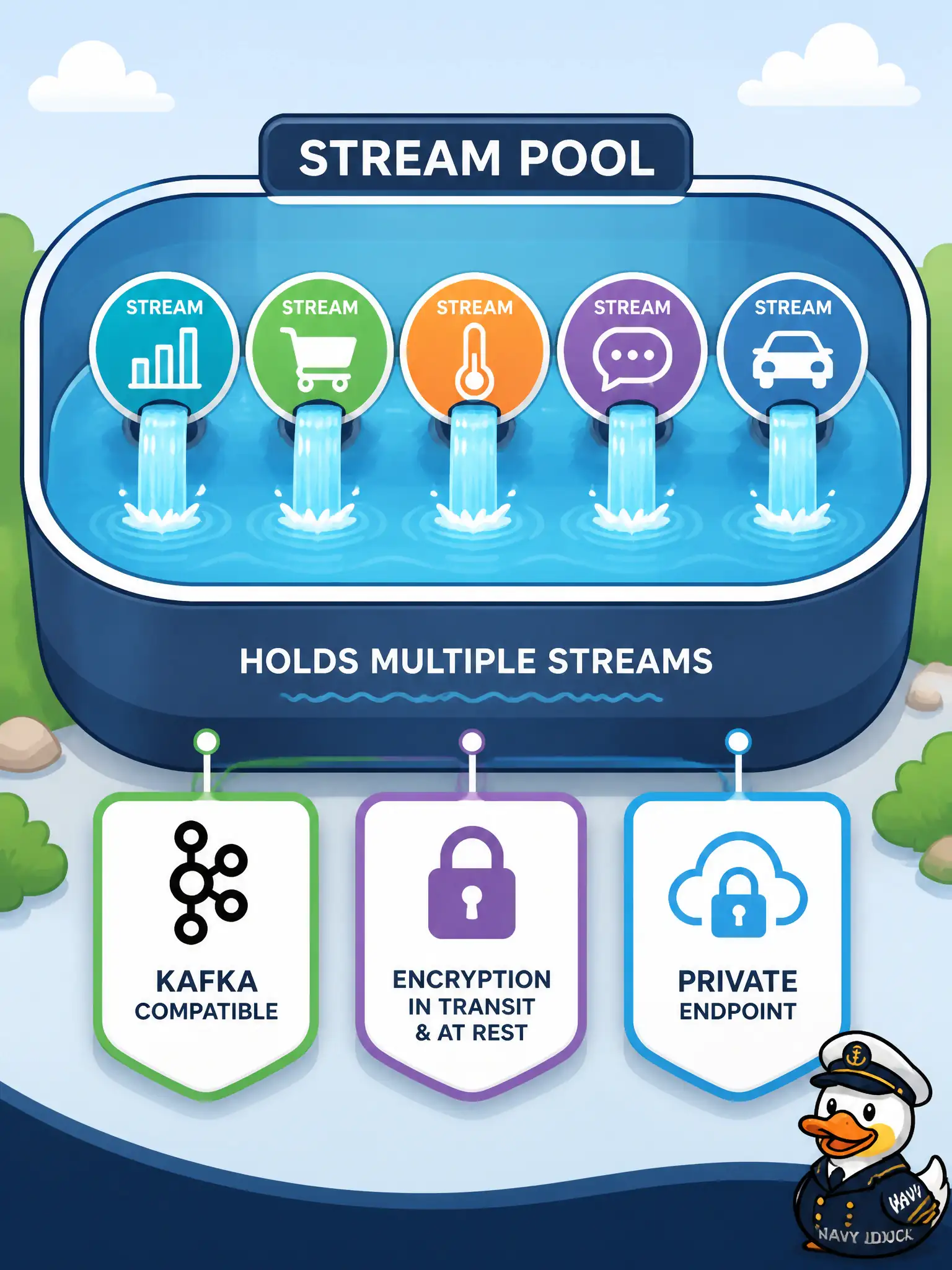
A stream pool is the shared utility closet for several streams—one place for Kafka compatibility, encryption, and private endpoint settings. Create a pool when multiple streams should share those settings; a lone stream can still live in a default pool. The pool is not a Kafka cluster you patch yourself.
Full Explanation
Shared Kafka compatibility, encryption, and optional private-endpoint settings for several related streams are owned by a stream pool. The pool groups streams and centralizes those settings so permits, inspections, and payments streams can share one administrative boundary. A lone stream can live in a default pool, but when metro government wants common Kafka bootstrap behavior, encryption posture, and private attachment, create and configure the pool deliberately.
A consumer group offset stores consumption progress, not encryption keys for partitions. An API Gateway usage plan entitlement meters HTTP API subscribers; it does not configure Streaming Kafka bootstrap servers. An OKE node pool shape has no bearing on Streaming retention hours or stream-pool settings.
Exam caveat: the stream pool is not a Kafka cluster you patch yourself. You consume Kafka compatibility as a Streaming feature while Oracle operates the service underneath.
Operational check: create a stream pool with the intended encryption and private-endpoint options, create multiple streams in that pool, and verify they inherit the shared Kafka and security settings rather than configuring each stream in isolation.