
A parks-and-recreation team has an OpenAPI 3.0 description for a new reservations API and wants OCI API Gateway routes pre-populated from that file. Creating an API resource is optional. What happens when they upload the OpenAPI description?
Select an answer to reveal the explanation.
Short Explanation
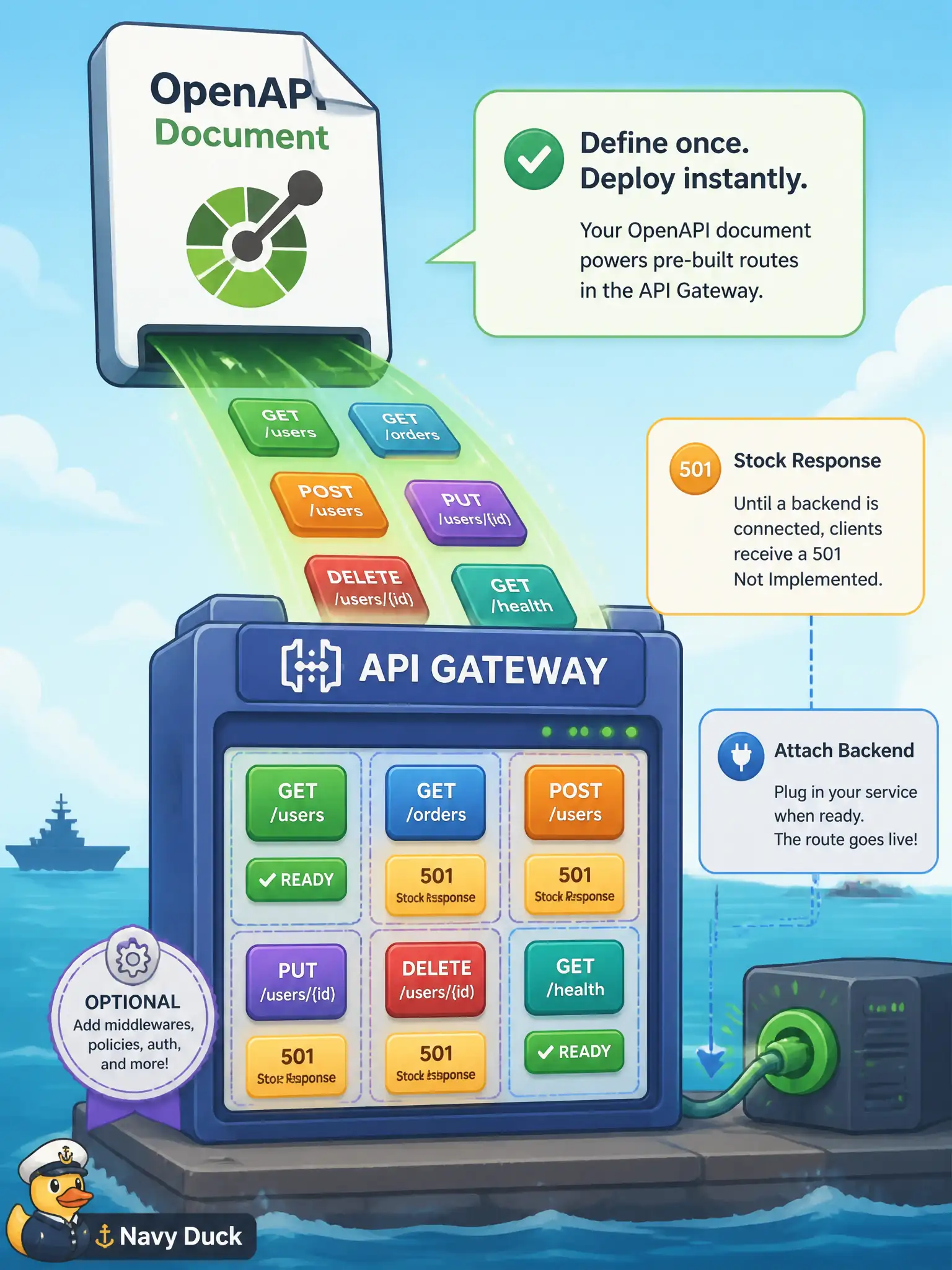
Uploading OpenAPI is like bringing a blueprint so the permit desk can pre-draw the windows and doors—handy, not mandatory. The description pre-populates deployment routes, and paths without a documented response get a stock 501 until you wire a real back end. You can still author the specification in the console or as JSON without an API resource.
Full Explanation
Uploading an OpenAPI 3.0 description to OCI API Gateway pre-populates deployment routes from the documented paths and methods. Creating a separate API resource is optional; teams can still author specifications in the console or as JSON. Paths that lack a documented response receive a stock 501 until operators point them at a real back end. For a parks-and-recreation reservations API, the upload is a blueprint that speeds route scaffolding without claiming the API is fully implemented the moment the file lands.
Claiming upload is mandatory and that console- or JSON-only deployments are refused is false—OpenAPI import is convenience, not a hard gate. Assuming OpenAPI import provisions an OKE Ingress and skips API Gateway mixes products and abandons the gateway deployment model. Expecting the upload to generate a complete Functions FDK program for every path invents code generation the gateway does not perform; back ends still must be built and attached.
Exam caveat: a stock 501 means “not implemented yet,” not success. Do not treat a green import as proof that reservations are live.
Operational check: import the OpenAPI file, inspect pre-populated routes, call an unimplemented path and expect 501, then attach a real back end to one path and confirm that route returns the back-end response instead of 501.