
Before wiring live back ends, a developer wants /health on a new municipal API deployment to always return a fixed 200 body from the gateway itself. Which back-end type should they use?
Select an answer to reveal the explanation.
Short Explanation
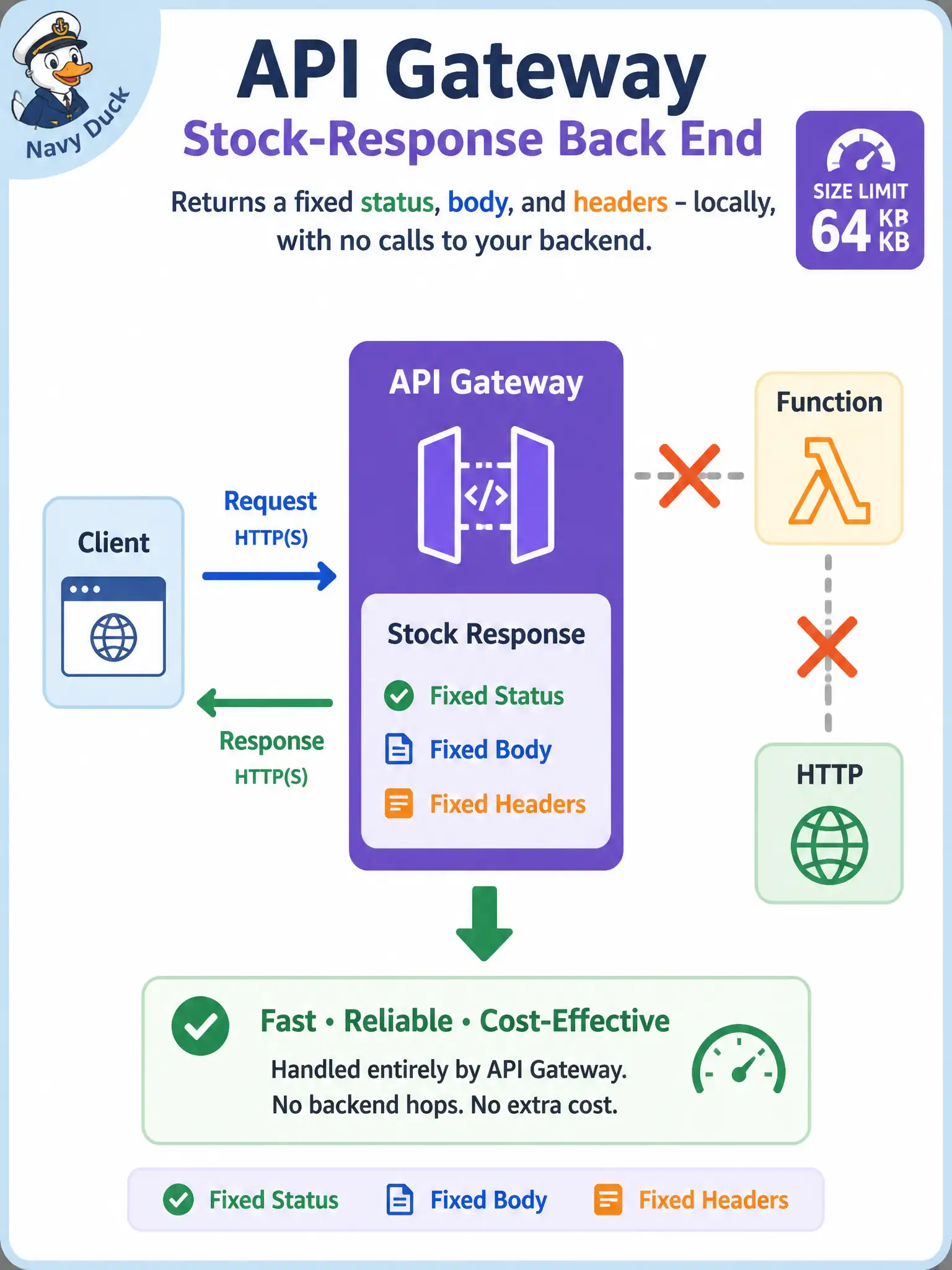
Stock response is the gateway answering from its own desk drawer—fixed status, body, and headers, no trip to a function or URL. Handy for health checks and placeholders, not for hosting big content.
Full Explanation
A stock-response back end lets API Gateway itself return a fixed HTTP status, body, and headers with no hop to a function or HTTP URL. For /health on a new municipal API deployment before live back ends exist, stock-response is the right choice: deterministic 200 responses for probes and placeholders without standing up compute or depending on Functions availability.
There is no general Object Storage back-end type on API Gateway for serving arbitrary large static sites as a substitute health-check mechanism. Requiring a Functions back end for every health check path forces cold starts and couples liveness to Functions capacity for a trivial fixed answer. A Notifications back end that emails operators does not return an HTTP health body to load balancers or uptime monitors.
Exam caveat: stock-response is intended for small fixed answers and scaffolding—not as a CDN replacement for large downloadable content. Operational check: add a /health route with stock-response status 200 and a small JSON or text body, probe it from monitoring continuously, keep real business routes on Functions or HTTP URL back ends, and replace placeholder stock routes as live services come online without recreating the gateway appliance.