
A citizen-services team wants HTTPS clients to call an Oracle Function through a normal API path without exposing the signed invoke endpoint or adding a func.yaml triggers block. Which API Gateway back-end type fits?
Select an answer to reveal the explanation.
Short Explanation
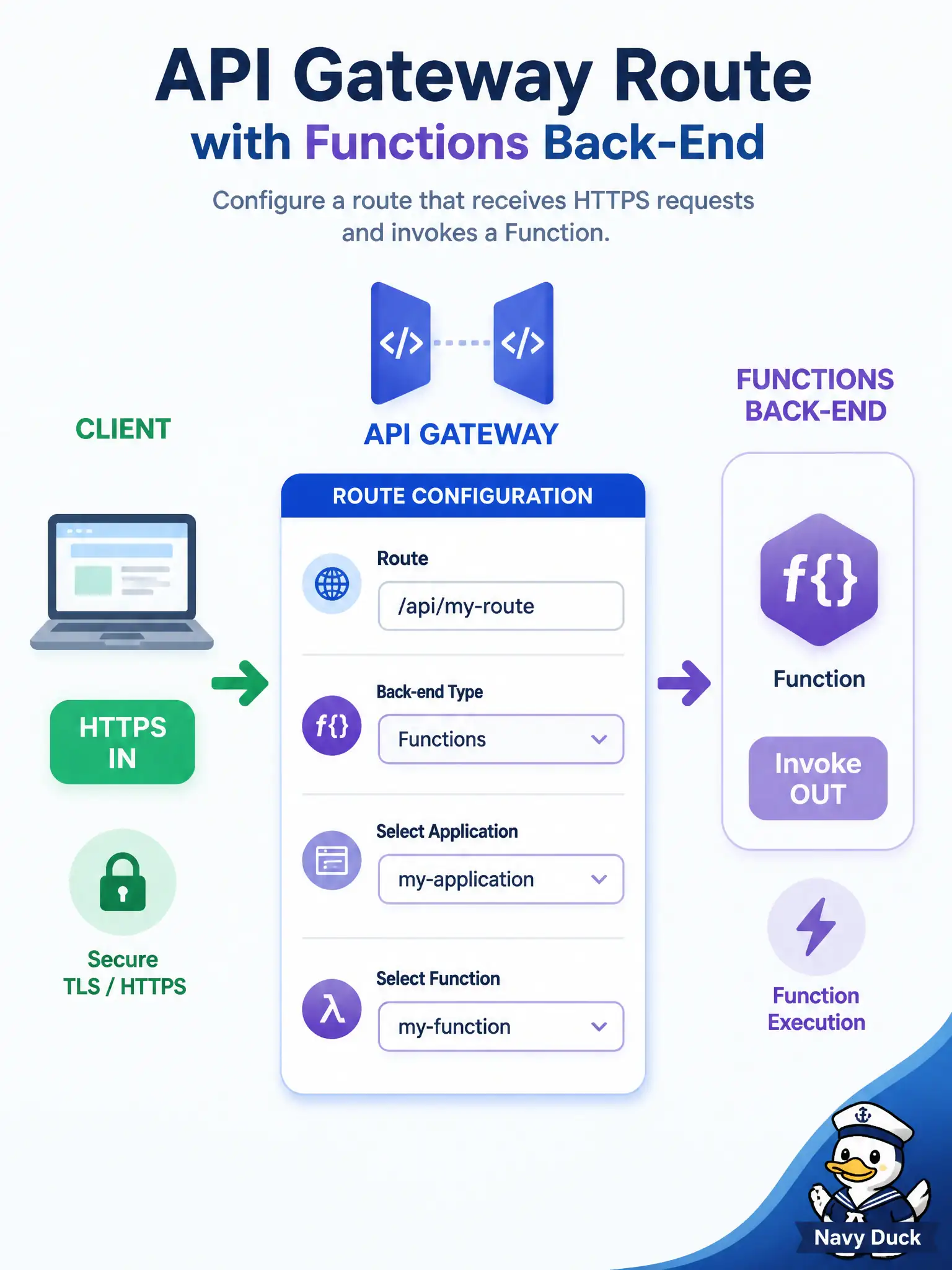
Name the function as the route’s back end and let API Gateway ring it for you. That is the documented HTTP API pattern—no triggers stanza and no handing clients a signed invoke URL.
Full Explanation
When HTTPS clients should call an Oracle Function through a normal API path without exposing the signed invoke endpoint or adding a func.yaml triggers block, use an API Gateway Functions back end. The route names the OCI Functions application and function; matching requests cause the gateway to invoke that function. This is the documented pattern for citizen-services HTTP APIs fronting Functions.
A stock-response back end returns fixed gateway content and cannot meaningfully “embed the function OCID in static headers” as a substitute for invocation. Pointing an HTTP URL back end at the raw Functions invoke endpoint without gateway Functions integration re-exposes invoke URL concerns and misses the first-class Functions back-end type. A Streaming back end type that synchronously executes the function per record is not the correct model for ordinary request/response HTTPS APIs.
Exam caveat: Functions back ends still require IAM and network paths that allow the gateway to invoke the function. Operational check: create a route with back-end type Functions selecting the application and function, call the gateway path over HTTPS, verify the handler runs, and confirm clients never receive or require a raw signed invoke URL or triggers stanza.