
After creating an empty API Gateway appliance for a licensing portal, clients still receive nothing useful. Which object must exist before the API accepts requests?
Select an answer to reveal the explanation.
Short Explanation
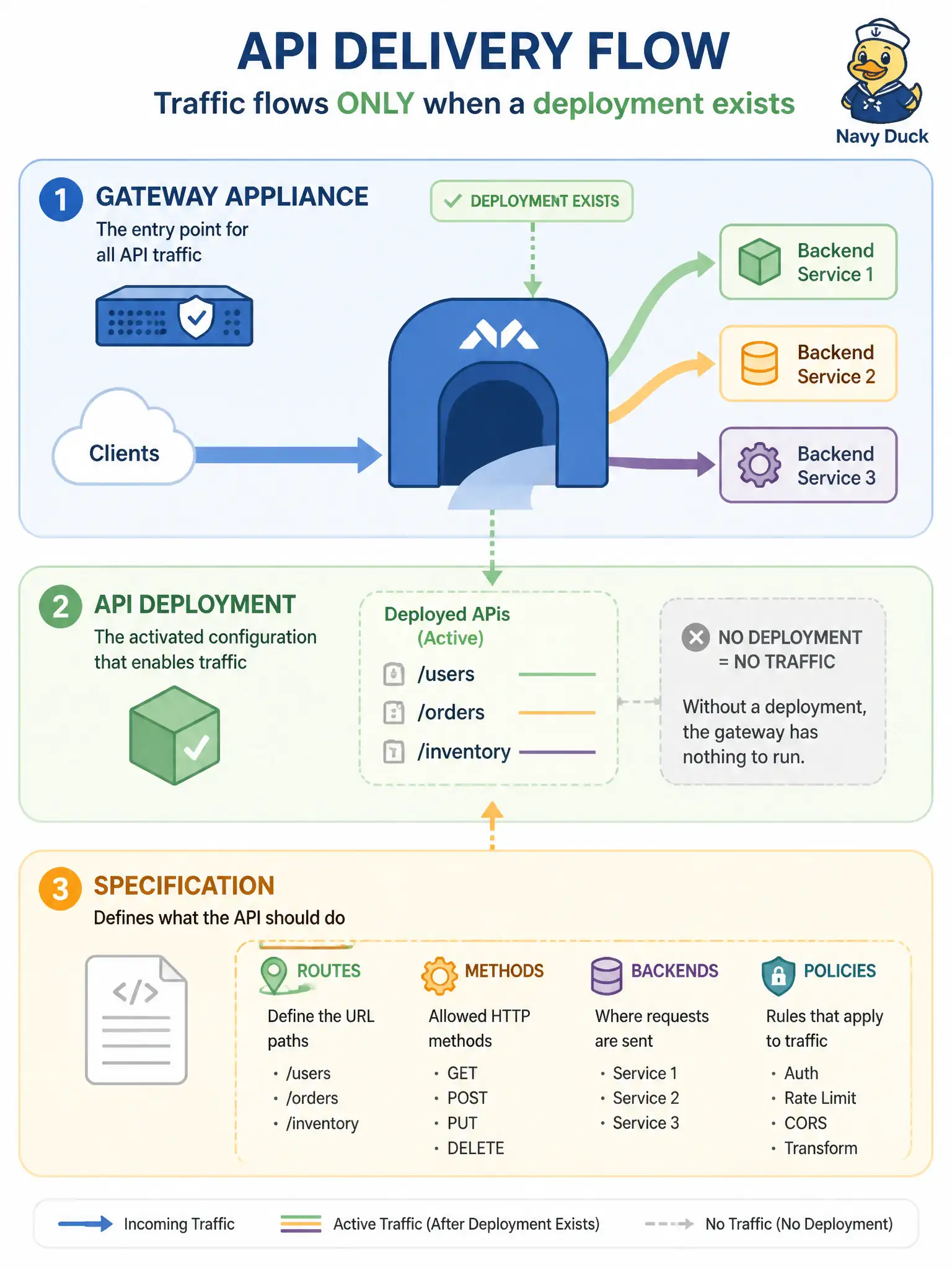
The gateway is the building; an API deployment with a specification is the staffed desk that actually takes requests. An empty gateway with no deployments greets nobody.
Full Explanation
An API Gateway appliance alone does not serve client APIs. After creating the empty licensing-portal gateway, you must create an API deployment whose specification defines routes, methods, back ends, and policies. Only then does the gateway accept meaningful requests for those paths. Zero deployments means no staffed API—clients receive nothing useful by design, regardless of how carefully the gateway hostname was chosen.
Linking only an OCIR repository to the gateway hostname does not define HTTP routes, methods, or back ends for the portal. Naming a Functions application identically to the gateway is irrelevant naming magic; deployments are not optional for serving an API. Attaching a Streaming pool as a default back end for every new gateway is not how empty gateways suddenly become callable APIs—Streaming is a separate ingestion pattern, not an automatic deployment.
Exam caveat: gateway versus deployment versus route are distinct objects—items often ask which layer is missing when clients fail after “creating the gateway.” Operational check: create a deployment with at least one route and back end on the new gateway, invoke the path successfully, confirm logs/metrics show traffic on that deployment, and treat later portal changes as deployment specification updates rather than recreating the gateway appliance for every route tweak.