
A municipality wants one HTTPS hostname for clients that reaches load-balanced microservices and several Oracle Functions without handing out raw function invoke URLs. Which component should sit in front?
Select an answer to reveal the explanation.
Short Explanation
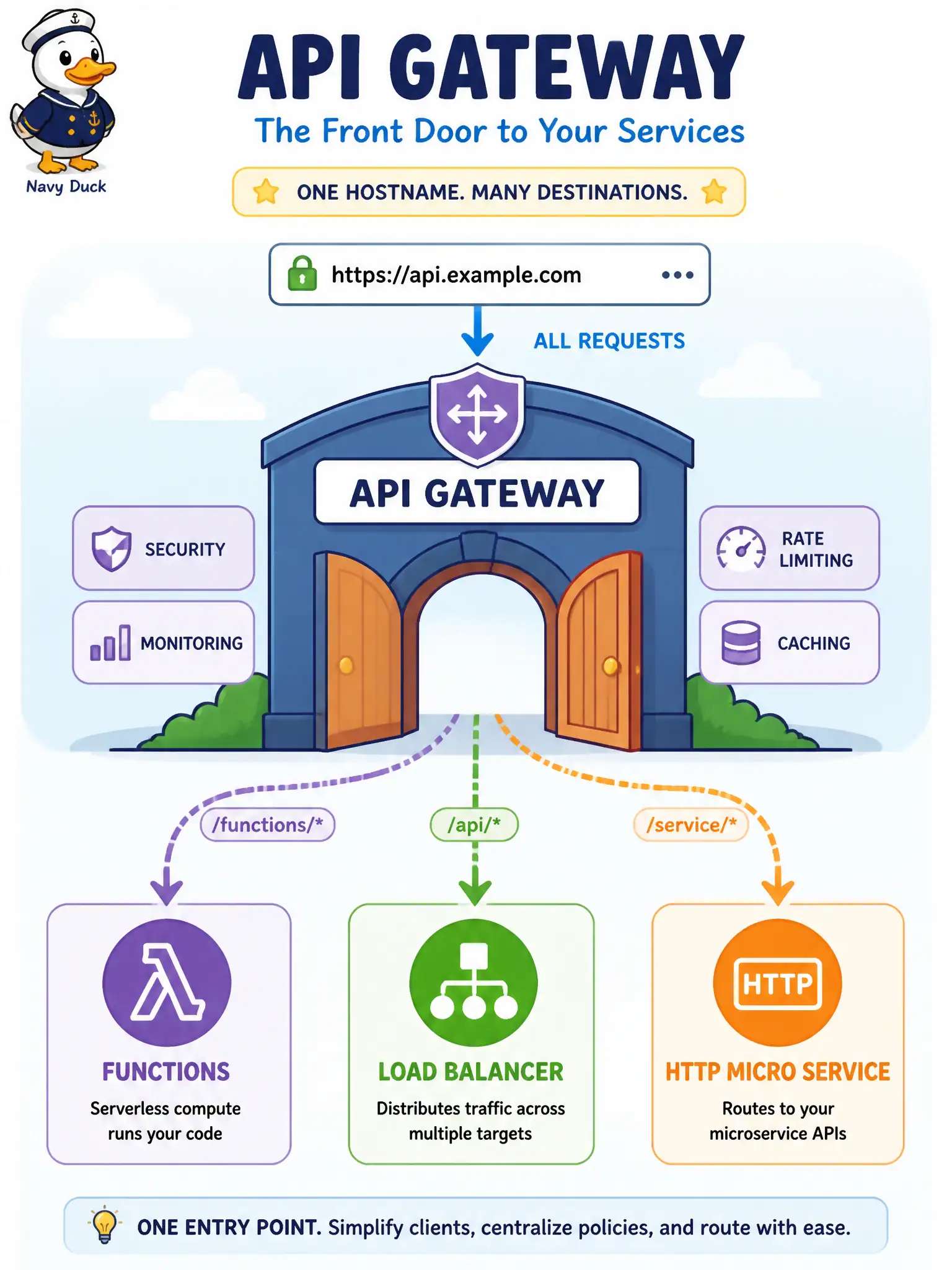
API Gateway is the city’s single reception desk: one hostname, many back offices. Clients get a proper API contract instead of raw function invoke URLs.
Full Explanation
API Gateway is the consolidating HTTPS front door for municipal clients that need one hostname reaching load-balanced microservices and several Oracle Functions. Deployments and routes map paths to Functions back ends and HTTP URL back ends without handing citizens raw function invoke URLs. That pattern gives a stable API contract, centralized policies, and a single public entry for the planning department’s mixed estate.
Publishing a separate public IP on each function with no shared front door forces clients onto raw invoke endpoints and fragments TLS and policy management across every handler. OCIR is a container registry for images; it does not terminate client HTTPS or route citizen traffic for function APIs. OCI Queue is an asynchronous messaging service, not a synchronous HTTPS façade that replaces API Gateway for request/response function invokes.
Exam caveat: API Gateway front-end type (public vs private) and VCN placement still matter even when Functions are the back ends—one hostname does not remove networking design. Operational check: create a gateway and deployment with routes to both an HTTP microservice and a Functions back end under one hostname, call both paths with HTTPS, confirm clients never see signed function invoke URLs, and validate authentication and rate-limit policies at the gateway layer before go-live.