
A city clerk wants an Oracle Function to accept a full multi-megabyte zoning PDF in the invoke body and return a similarly large annotated copy. What is the correct design constraint?
Select an answer to reveal the explanation.
Short Explanation
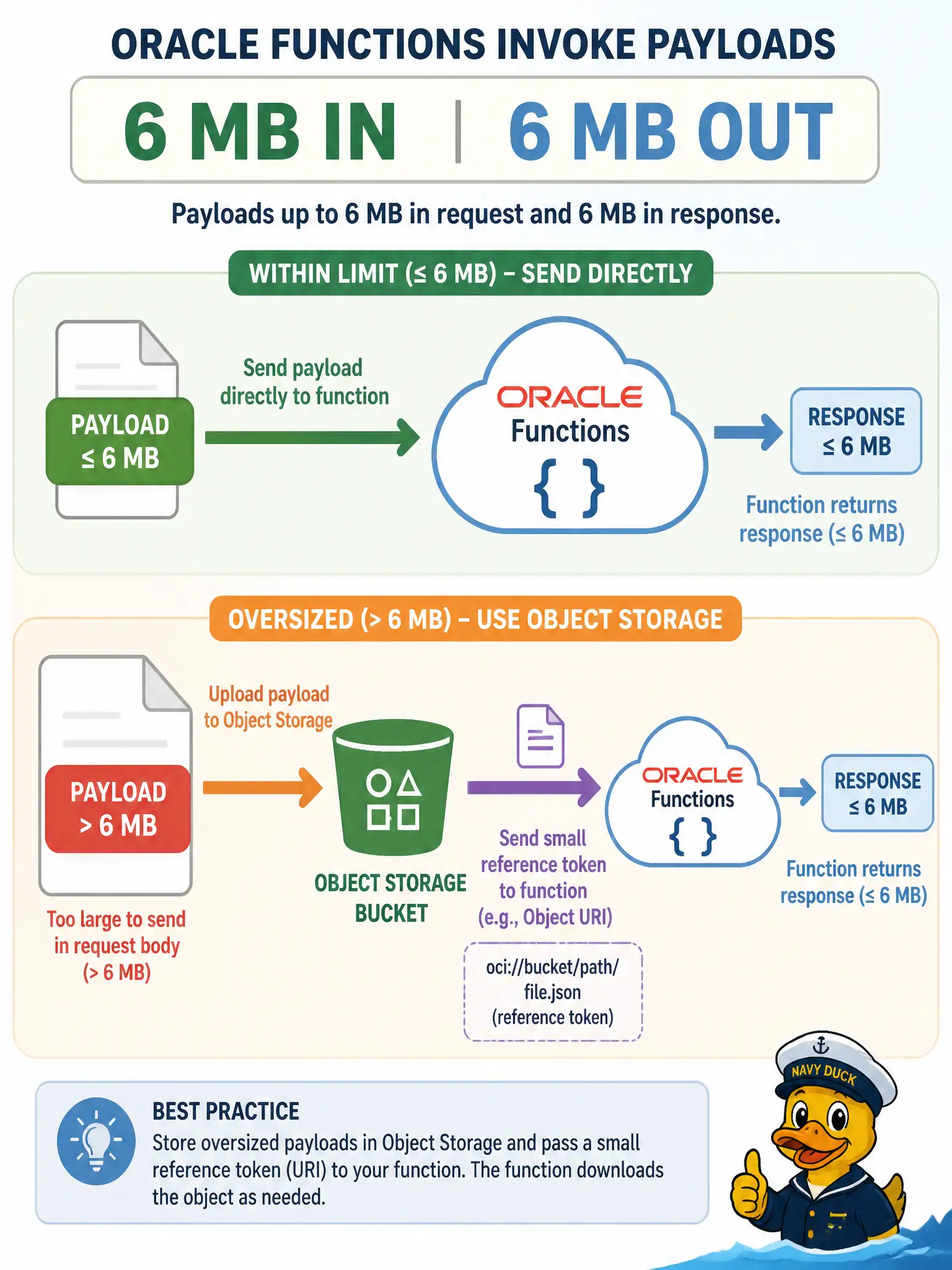
Picture the function mailbox as a fixed-size slot: the letter in and the letter out each max out at 6 MB. Bigger zoning packets belong in Object Storage, with the function getting a pointer instead of the whole file.
Full Explanation
Oracle Functions caps both the request body and the response body at 6 MB each, and those ceilings are fixed product limits. For the city clerk’s zoning PDF workflow, the correct pattern is to store the multi-megabyte document in Object Storage and pass an object reference (or PAR-style pointer) into the function so the handler streams or processes from storage and writes an annotated object back—returning only a small status or URL in the invoke response.
Raising function memory to 3072 MB does not enlarge the invoke payload envelope; memory and body size are independent controls. There is no supported streaming invoke mode that removes the response size ceiling for ordinary Functions invokes. Filing a service limit increase also does not raise the documented 6 MB request/response caps for Functions—those are architectural limits, not soft tenancy quotas you negotiate upward for every app.
Exam caveat: confusing memory, timeout, and payload limits is a common trap; each constraint fails differently and is tuned separately. Operational check: measure PDF size before invoke, ensure objects land in a bucket the function’s resource principal can read/write, invoke with a reference payload under 6 MB, and verify the annotated object appears in Object Storage rather than attempting a full binary round-trip through the invoke API.