
During open enrollment, the city’s parcel-search service is the hotspot while permit submission stays quiet. What scaling approach fits independent services?
Select an answer to reveal the explanation.
Short Explanation
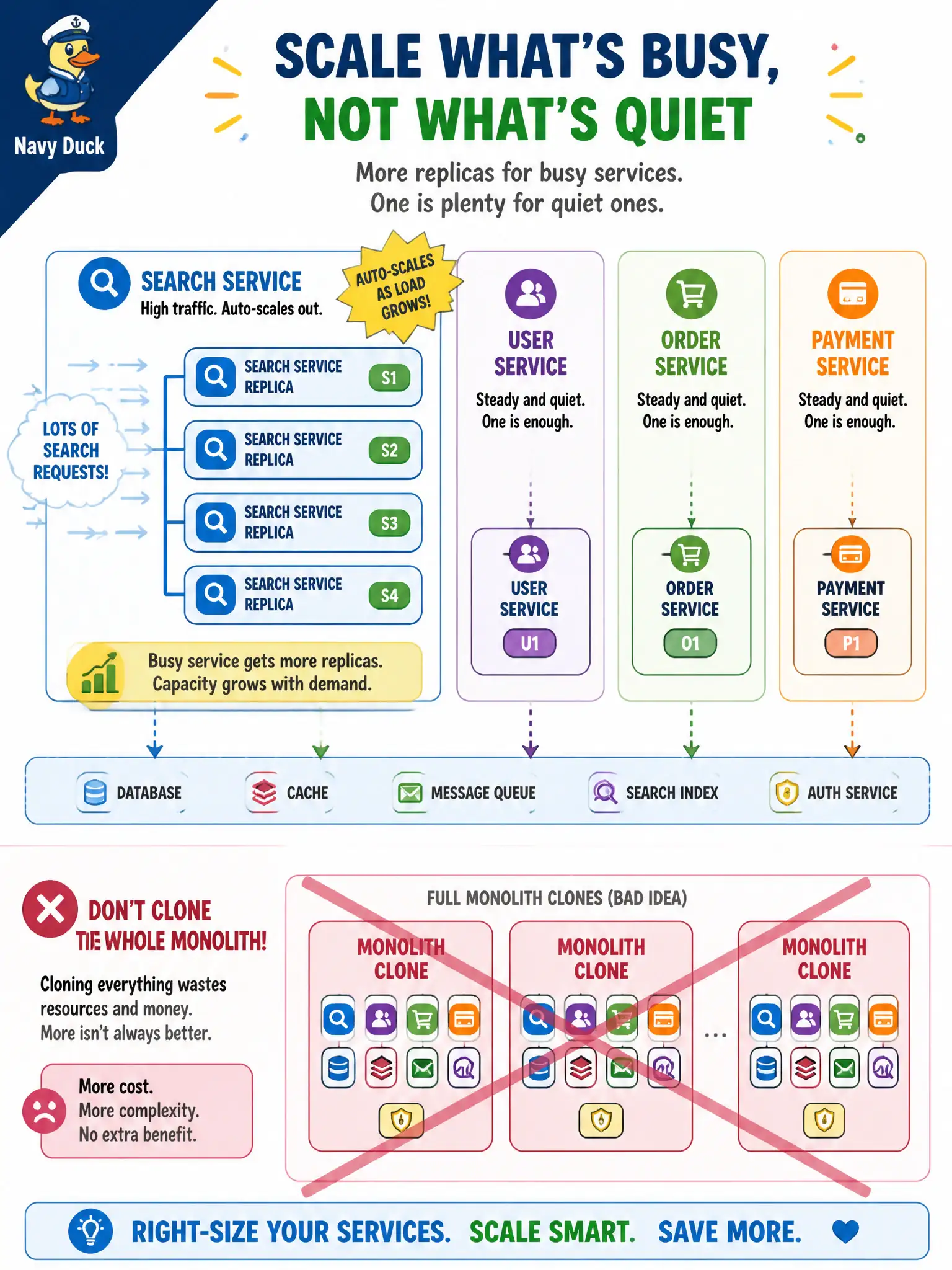
If only the search desk is crowded, you open more search windows—you do not rebuild the whole city hall. Independent services let you spend capacity where demand actually is.
Full Explanation
Independent services unlock selective horizontal scale. When open enrollment spikes parcel search while permit submission stays quiet, the economic move is to add replicas of the search service alone—more capacity where demand actually is—without cloning every former monolith capability. That is a core cloud-native benefit of process isolation for municipal workloads with uneven seasonal load.
Cloning the entire former monolith for every search spike wastes capacity on quiet tiers and reintroduces coarse scaling economics. Scaling only the permit submission tier because it supposedly shares a database with search misunderstands both the hotspot and the independence goal; shared databases often prevent true independent scale and the wrong tier is being grown. Disabling search during peaks abandons the citizen capability that is under demand instead of absorbing load where it appears.
Exam caveat: independent scale assumes the search service’s data and dependencies can actually absorb more replicas; a shared write bottleneck still limits you even if processes are separate. Operational check: watch search versus submission request rates and replica counts during a load test and confirm search replica count rises while submission capacity stays flat.