
Before OKE terminates or recycles a managed worker so Pods can move safely, what sequence does the platform use?
Select an answer to reveal the explanation.
Short Explanation
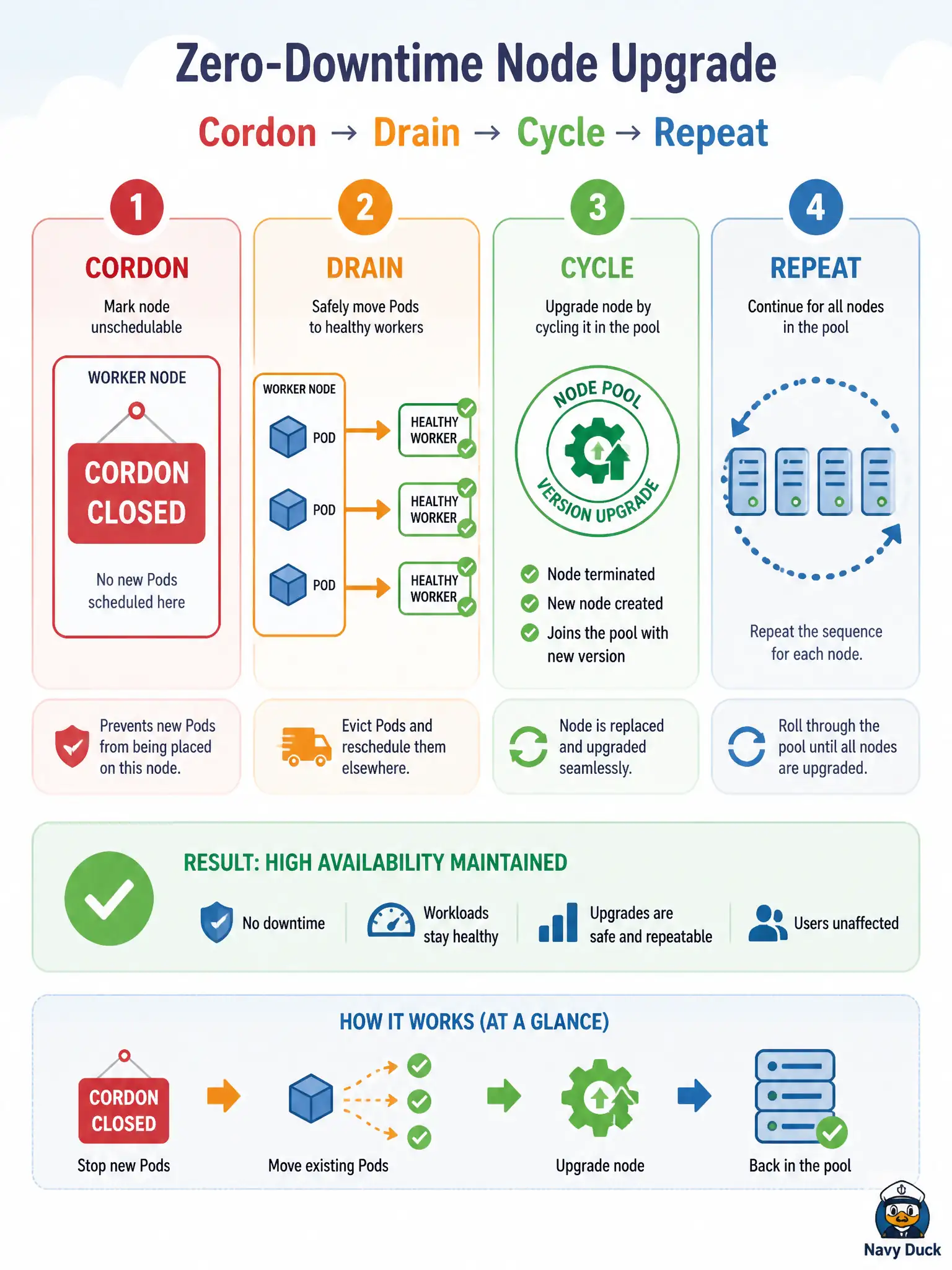
Cordon is the “closed” sign; drain is the orderly exit. OKE marks the node unschedulable, moves Pods elsewhere within the eviction grace period, then recycles—especially useful when cycling a pool for a new Kubernetes version.
Full Explanation
Before OKE terminates or recycles a managed worker so Pods can move safely, the platform sequence is to cordon the node (mark it unschedulable so no new Pods land there) and then drain it (evict existing Pods onto other workers within an eviction grace period). That orderly handoff preserves capacity elsewhere while the node is recycled—especially important when cycling a pool for a new Kubernetes version or node property on a municipal cluster.
Deleting the node pool immediately and recreating Pods only after DNS TTL expires fails by concept because abrupt pool deletion skips controlled eviction and can strand workloads without a planned reschedule window. Scaling the Deployment to zero globally, then rebooting every worker in parallel fails because it takes the entire municipal service down instead of relocating Pods node by node, and parallel reboot maximizes correlated outage. Force-deleting all PersistentVolumeClaims so volumes detach before the node stops fails because PVC deletion destroys durable claim bindings unrelated to safe node drain and can lose application data.
Exam caveat: drain still respects PodDisruptionBudgets and termination grace—insufficient replica headroom or a tight PDB can block drain until capacity or budgets are adjusted. Operational check: before a planned recycle, confirm spare worker capacity, cordon/drain a single node in a non-prod pool, verify Pods reschedule Ready elsewhere, then proceed with pool cycle automation.